



Apple and the enterprise – Are you ready?
Apple isn't ready for the enterprise. Apple has been ready for years. Now, the enterprise is ready for Apple.
Election rant 7: Labor’s arrogance hamstrung NBN policy
Labor’s broadband policy is better than the Coalition’s. But Australia may not choose what is best for it. Australia may choose the leaders it feels more comfortable with instead.

Badly designed contracts doom public IT projects to failure
IT contracts often obscure objectives through technological jargon, man hours and deadlines. If business objectives and outcomes were better stated in contracts there would be clear and obvious accountability. When there is a common understanding of success the more likely are successful outcomes.

Stop the pirates? Behind Brandis’ copyright crusade
The lack of hard, unbiased research driving this debate on piracy, as well as the privileged access to the Attorney General that entertainment industry lobbyists seem to have, does not bode well for robust, evidence-based policy being adopted in the near future.
Hockey’s IP inquiry another opportunity likely to be missed
Australian Treasurer Joe Hockey has asked the Productivity Commission to undertake a wide-ranging review of Australia’s intellectual property regime. The review is an opportunity for an increasingly distracted government to set its stamp on the Australian economy for the next 20 years. It is an opportunity that will almost certainly be missed.

Australian court holds Google responsible for linking to defamatory websites
The South Australian Supreme Court this week found that Google is legally responsible when its search results link to defamatory content on the web.

They did it
From this day on, whenever Australian engineers are facing a tough task, they should look up into the skies and remind themselves of the power of the Australian mind. If Australian ingenuity can put such a hunk of incredibly complex communications infrastructure into orbit to serve our broadband needs, purely on the strength of some clear thinking and a lot of hard work, then we truly can do anything. And we will.

Mental shift: The way Australians buy and upgrade smartphones is changing
The end of two year mobile contracts; the end of smartphones on contracts at all; the rise of phablets; domination of the market by just two vendors; domination by only a handful of models: All of these are constituent parts of a revolutionary shift sweeping the nation's smartphone market at the moment. Get ready to upgrade your thinking: The way Australians buy and use mobile devices is about to change massively, and it's a wonderful thing indeed.
Tense Telstra times
After last year's resignations of David Moffatt and Holly Kramer, who along with Milne were favourites within former chief executive Sol Trujillo’s regime, it would appear the stresses within the ‘new’ Telstra are starting to show.
Australia desperately needs stable telco policy
The long-term nature of infrastructure investment and the squabbling of the past half-decade has made it increasingly clear that a bi-partisan approach to telecommunications policy is needed in Australia. The only difficulty may be convincing our arrogant, indecisive, stubborn and incredibly own-party blinkered political leaders that they should sit across the table from each other and discuss the issue like adults.

Neither AT&T nor Turnbull are telling the whole truth
The local debate over AT&T's plans to deploy gigabit fibre to 100 US cities starkly demonstrates that neither giant telcos nor the politicians regulating them can be trusted to give Australians 100 percent of the truth about how next-generation broadband infrastructure rollouts are being or should be deployed.

Morrow must receive the dignity that Quigley never did
Those opposed to the Coalition's rival broadband policy must not step over the line into offensiveness in their pursuit of NBN Co chief executive Bill Morrow over past failures at US utility Pacific Gas & Electric. The better path of valor would be to treat Morrow with the same level of respect and dignity that his predecessor Mike Quigley deserved, but never got.
Is the party over for Julian Assange and WikiLeaks?
With just over two weeks to go in the campaign, Julian Assange’s WikiLeaks Party has experienced some unsettling events that suggest it may be unravelling.
Coalition reveals new FTTN broadband policy
The Federal Opposition today released a comprehensive new broadband policy to rival Labor's big-spending National Broadband Network project, describing its own initiative as a landmark 'Fibre to the Nothing' (FTTN) proposal.
Trolling our way to national security
Yesterday's Daily Telegraph features a call to action – an Internet petition to stop trolling (the media definition of any offensive or deliberately hurtful behaviour online, not the traditional definition). This is both terrible journalism and falling for a trap.

The road to public sector IT hell may not be paved with intentions at...
Something that scares me enormously is the house of cards that many (if not most) governments have built with their IT systems.

‘Shelved’? No. Data retention will be back
Yesterday it was widely reported that the Federal Government had 'shelved' its data retention plans, walking away from the controversial proposal to monitor all Australians' communications. But the reality is the complete opposite: Data retention is still being actively considered as a policy and will shortly return to plague Australia once again.

Voice from the outer world: Five questions Simon Hackett should be asking NBN Co
That moment which many Australian technologists fervently hoped for but never expected to see has come to pass: Simon Hackett has been appointed to the board of the National Broadband Network Company. But what questions should the Internode founder be asking NBN Co's executive management team? Here's five ideas to start with.

Myer fail displays appalling IT, business incompetency
The week-long outage of Myer's website starkly displays the fact that the company and its outsourcing partner IBM had failed to properly develop and test their infrastructure or put in place the most basic disaster recovery and business continuity plan, as well as highlighting the incredible immaturity of online retailing in Australia.
Coalition to adopt UK broadband platform
Communications Minister Malcolm Turnbull has confirmed plans to implement the same underlying broadband infrastructure platform in Australia which has already been used for some time in the UK, with the two nations' incumbent telcos Telstra and BT to collaborate on the exchange over the next several years.
Tick tock, NBN Co. Where are the rollout stats?
By continually declining to release hard statistics about how the rollout and uptake of its network are proceeding, the National Broadband Network Company risks portraying itself as exactly the kind of negligent and overly bureaucratic monopoly which the Federal Opposition has long accused it of being.

Before this decade is OUT: What if the “giants of the web” designed government...
What have we learnt from the past decade of "government online"? And what could we learn from the giants of the web? This is an examination of how an understanding of complex systems, risk and common patterns can be applied in an economy-wide effort of breakthrough innovation to drive the digital transformation of government service delivery over the next decade.
Australia’s blue collar ICT challenge
The bottom line is that Australia lacks call centres, cloud computing hubs, ICT hardware and software manufacturing capability not because we don't have high-speed broadband. Rather it is the lack of a definable understanding of how ICT services and their supporting labour force will take its place in the roll-out, development and economic benefit of the NBN that represents the real issue needing to be addressed.

Why the drop in illegal movie downloads in Australia?
This article is by Marc C-Scott, Lecturer in Screen Media, Victoria University. It originally appeared on The Conversation.
analysis There has been a decline in...
Smacking down online piracy; does New Zealand know best?
We know online piracy exists; we know governments want to stop it – but what are the options?
What Apple’s incredible quarter means for Australia
$46 billion in revenue. 64 percent quarter on quarter growth. 37 million iPhones shipped. Apple just stunned the world with some incredible financial growth over the last three months of 2011. But what do these results mean for Australia?
Oh dear: How many Aussie CIOs did NOT buy an iPad?
When Delimiter started snooping around this week to work out which Australian chief information officers had bought an Apple iPad, we expected to find quite a few that had. What we didn't expect to find is that almost every chief information officer that we checked out had picked up one of the hyped Apple tablets.

Using SurveyMonkey? Be careful … if you’re an Australian Govt organisation
I've had an interesting and robust conversation online in the last day regarding how Australian councils and governments are using overseas services like SurveyMonkey to collect information from citizens and residents.
Save the NBN Kevin, you’re our only hope
The fate of the National Broadband Network now rests squarely in the hands of Kevin Rudd. If the former Prime Minister wins power back from Julia Gillard, Labor has a chance of retaining power at the next election and continuing the NBN rollout. If he fails to do so, most commentators agree, Gillard will be annihilated and Abbott will scrap the project wholesale.
I’m mad as hell, and I’m not going to take this anymore. Let’s fix...
For far too long, Australia's political sector has gotten technology policy completely wrong. I'm mad as hell, and I'm not going to take this anymore. Let's take Delimiter into the Canberra Press Gallery and literally write the book on tech policy while we're there.
Five reasons to block Woz’s Australian citizenship
A number of media outlets have reported this week that Apple co-founder and global technology sector luminary Steve Wozniak is attempting to become an Australian citizen. But is this really a good idea? Here’s five reasons why we should stop the Woz at the border and send him packing back to his home country of the United States.
First impressions of the new Realestate.com.au
Certainly they could have done more, and I am not a fan of everything that they have changed but with the number one site in the space you have to be mindful of the "If it ain't broke don’t fix it" rule.
Why the Apple iPad will change the face of healthcare
In the healthcare setting, and no doubt numerous other settings also, those added inches make a significant difference.

AGIMO needs a little Obama magic
It's hard to imagine AGIMO getting to the point where it has the direct support and interest of Australia's Prime Minister of the day in its efforts. But, if we've learnt anything from Vivek Kundra in the US, it's that this kind of executive-level buy-in is possible.

Malcolm Turnbull was Australia’s worst ever Communications Minister
He might be charismatic, he might be popular, and pretty shortly he might be Prime Minister. But when it comes to technology policy, Malcolm Turnbull has been a disaster. The Member for Wentworth will be remembered as Australia’s worst ever Communications Minister — the man who singlehandedly demolished the NBN and put a polite face on draconian Data Retention and Internet piracy laws.

NBN Senate Committee politicised from start
The Senate's move to force senior executives from the National Broadband Network Company to appear before its new NBN committee starkly demonstrates the extreme degree of politicisation which the NBN project as a whole is subject to.
Firemint – success or sell-out?
But I can’t help feel the way I have always felt when seeing something amazing that Australians have built with their own blood, sweat and tears being snatched up by a massive, impersonal, multinational. Like so many Australian companies before it, Firemint has now missed its chance to become something truly great – it has cashed in its chips and joined the mothership.
The real reason The Hoff is in Sydney
Delimiter can exclusively reveal that the iconic American actor has been in Australia for the past six months, on a secretive mission to aid Australia's technology sector in its quest to finally overtake Silicon Valley and become the premiere global market for technology companies.
NBN war: Is The Australian out of line?
Conroy’s arrogant attitude towards criticism of his prize project will need to change drastically — and soon — if he truly wants to drive the project forward and to success. Otherwise, he may find it’s not just The Australian on his back about the issue — but much of the rest of the media as well.
Oh dear: Alan Jones, Chika, Steve Waugh and VMWare?
The trustees list of the of the Sydney Cricket & Sports Ground Trust reads like a roll call of Sydney blue blood royalty.

Big Red Button: How NBN Co’s launch events are unfairly fuelling Labor’s election campaign
NBN Co's constant stream of launch events is providing Labor with a massively uneven platform to promote its broadband policy and very likely breaches the Government's Caretaker Conventions.
FactCheck: Will the NBN take another 20 years to complete?
The 20-year time to completion quoted by Tony Abbott seems to be some kind of rough estimate or guess, based on unclear assumptions. It is unlikely to be correct.
4G: How Telstra will ROFLstomp Optus, VHA
When the reality of a working LTE deployment hits Australia through late 2011, with all mobile phone owners increasingly being smartphone owners ... Telstra's Next G network will become nothing short of irresistable.
Reality check: AFACT is not planning mass lawsuits
Worried that AFACT will start suing individual users, now that it has lost its High Court case against iiNet? You needn't be. The organisation itself has denied any such plans, and even the legal case to identify Australian Internet pirates is on shaky ground at the moment.

A cashless society and the five forms of mobile payment that will get us...
Visions of a cashless society started being portrayed from the 1950’s along with other aspects of a future waiting to be transformed by technology. That future has not yet arrived but it is now possible to exist without using cash on a daily basis. In fact, in a survey released this week, 25% of Australians claim not to use cash in a given month. In the US, 50% of Americans carry less than $20 in cash at any time.
It’s too soon for Windows 8
Many organisations upgrading to Windows 7 probably clandestinely expect their new desktop operating system to last as long as the last one -- a decade or so.
Turnbull must quickly fill his NBN policy holes
Last week Malcolm Turnbull outlined a telecommunications policy which could become a credible alternative to Labor's NBN juggernaut. But for all its surface-level attractiveness, the Liberal MP's vision is far from complete -- and unless the holes are plugged quickly, it will die a quick and painful death.
Dotcom turns twenty-five
Whether it's an effort to block Google access in China, an effort toward mandatory internet censorship in Australia, or otherwise, these efforts are truly futile.
Remember, Telstra isn’t that expensive any more
Here at Delimiter, we’ve created this handy motivational poster to help Optus mobile customers through the bad times.
The Govt should hold a referendum on the NBN
The Federal Government should hold a non-constitutional referendum during the next Federal Election on whether Labor's National Broadband Network should go ahead, in order to settle the long-term fate of this important decade-long infrastructure project once and for all and end the incessant political bickering around it.
E-Health announcement is really bizarre and very incomplete
As with all such announcements the only thing that is missing is any detail. Until that becomes clear this is so much hot air. Worryingly, the lack of information on the following issues leave one wondering just how seriously all this has been planned and developed.
Calling Conroy an idiot won’t stop the filter
Getting rid of Conroy won't get rid of the filter -- it's not just a personal thing, it's endorsed by Cabinet. Attacking him in the hope that his unlikely removal would kill the proposal is just a waste of time.

Europe says no to data retention, so why is it an option in Australia?
Last week the Court of Justice of the EU (CJEU) ruled that data retention regulations, as they currently stand, are not in accordance with EU law and the European Parliament voted in favour of introducing net neutrality into EU telecoms regulation the week before. As Australia is currently in the midst of a data retention inquiry – the second in three years – what effects will this ruling have on the debate?

Don’t sue us for search: Google’s unnecessary safe harbour appeal
A brief review of the history of Australian safe harbour legislation and recent ISP-related case laws in the US shows the best way to provide legal certainty for online intermediaries would be to introduce “fair use” exceptions alone. More safe harbour rules aren’t needed at this stage.

Five things you need to know about the Trans-Pacific Partnership
This article is by Charis Palmer, Deputy Business Editor at The Conversation. It originally appeared on The Conversation.
After eight years and 19 rounds of...
Dated Treasury advice does not invalidate the NBN
If there is one thing we can absolutely rely on with respect to the debate about the National Broadband Network, it is that every week, some minor interest group, technically illiterate Coalition politician or blow-in journalist will find some new and completely spurious reason why the project shouldn't go ahead.
Why data breach reporting should be mandatory
As we move forward in this era of online transactions and social media, there’s a need for security and privacy legislation to keep pace. Most importantly, there’s a need for Australians to feel confident that their personal information is being kept safe by those we entrust it to.
Reality check: NBN Syntheo delays not significant
If you believe what you read over the past week, you'd think that construction delays on the part of contractor Syntheo have significantly derailed the progress of the National Broadband Network. However, as is often the case with the NBN, the truth couldn't be more different. The fact is that network remains squarely on track to meet its June 2013 rollouts targets.

The ‘myth’ of the Australian entrepreneur
A better understanding of the realities of entrepreneurial life in Australia will lead to better informed industry policy, and perhaps increased support for an ecosystem that is a key driver of future growth and development for Australia.
NBN Co paying lobbyists to woo the Coalition? This madness must stop.
If NBN Co's board has indeed hired political lobbying firm Bespoke to represent itself to the Coalition ahead of the Federal Election ... then that represents an extraordinary move, and one which I, for one, and no doubt countless others, simply cannot approve of.
Weighing the environmental costs: Buy an eReader, or a shelf of books?
Bookshelves towering floor to ceiling filled with weighty tomes, or one book-sized device holding hundreds of “books” in electronic form: which one of these options for the voracious reader creates the least damaging environmental footprint?
Cost benefit rationality of the false NBN dichotomy
The truth is -- as Malcolm Turnbull has been at pains to point out, to his peril -- that the private sector has stood willing and able to replace and upgrade vast chunks of Australia's ageing yet still very functional telecommunications infrastructure for some time– as long as that ever tricky requirement falls into place – regulatory certainty.
Coalition hasn’t addressed basic NBN policy issues
Fibre to the node isn't intrinsically a bad solution for Australia's broadband needs. But when you compare it to Labor's more visionary fibre to the premises plan, the differences between the two start to become starkly apparent. Australia deserves a whole lot better than what an incoming Coalition government will serve up to us.

Revised Delimiter Statement of Principles
Hi everyone,
welcome back! Delimiter starts publishing again today, and from today I'm also commencing work on my technology policy book, The Frustrated State. It...
Dear Stephen, your site is broken
Someone -- probably someone in your IT department that is left over from when Helen Coonan was the minister -- has put this bit of code that will remove the word "ISP filtering" from your list of most popular tags.
Why a 4G iPhone will spell doom for Vodafone
The local launch of a new Apple iPhone supporting 4G mobile speeds will spell disaster for ailing mobile carrier Vodafone -- the only major mobile telco in Australia not to have launched or even started constructing a 4G network to deliver improved speeds to customers.
ISP filtering policy is not evidence-based
The principle objection I have is that the policy mandates that ISPs spend a huge sum of money to deploy and maintain masses of new infrastructure. Whether this burden is passed onto Australians via taxes or via increased ISP fees, we will end up paying for it. We will end up paying, and it won't do anything.
Gillard is ripping up Labor’s NBN credibility
No matter how hard the Australian Labor Party tries, when it comes to the telecommunications sector it just keeps on shooting itself in the foot -- a fact demonstrated starkly by Prime Minister Julia Gillard's appalling comments on the NBN over the past week.
Westpac: A case study for the complex cloud
Until we start to have more complex debates about cloud computing, Australian CIOs will face great challenges in explaining the right path forward for their organisation to senior executives such as CEOs and CFOs. Because right now, 'cloud' covers so much under one umbrella that many CIOs are switching off when they hear the term used ... while most CEOs and CFOs no doubt think, when they think about the cloud, that it's a catch-all solution to every problem.
Dreaming of the perfect NBN policy
In an ideal world, the perfect National Broadband Network policy would be a mix of the policies espoused by both Labor and the Coalition, taking the best ideas from both sides and ditching the bad ones. It would address Australia's short-term needs while still investing in the future. Here's how it would work.
Oh dear: The top ten funniest Conroy YouTube videos
Sometimes it's worth taking a lighter look at how some sections of the Internet -- notably, the denizens of YouTube -- have portrayed Communications Minister Stephen Conroy. So we've scoured the video sharing site for our favourite videos.
Oh dear: Telstra’s cyber-safety quadrants
We think Australia's telcos might be taking cyber-safety a little too seriously, if this video by Telstra is any indication.
The Coalition’s NBN policy is a triumph of short-termism over long-term vision
Malcolm Turnbull has moved the Coalition light years – or at least several million fibre optic kilometres – from the Luddite criticisms thrown up by the Opposition during the 2010 federal election campaign. That said, it was sad to see the number of debating tricks employed in launching his national broadband policy.

How Australia got online 25 years ago
It is a quarter-century since Australia first connected to the internet, but this technological breakthrough had a long gestation. What is now a global phenomenon was once the property of an exclusive community.
Correction: Cutting the NBN won’t save money
Yesterday Opposition Leader Tony Abbott stated in a high-profile speech at the National Press Club in Canberra that cutting Labor's National Broadband Network project would free up Federal Government money to be spent in other areas such as transport. It was a nice political soundbite. However, unfortunately, this statement was factually incorrect.

Electronic voting may be risky, but what about vote counting?
The right technologies, deployed in the right way, can assist with speeding up vote counts without putting the integrity of our voting system at risk. The place for that technology is not as a replacement for the paper ballot.
How can Australia build a great technology sector?
If we can get a consensus about a solution as strong as the one that existed yesterday in reaction to my initial piece on Atlassian's situation, that might be a starting point to take Australia forward and help it to become a real technology powerhouse.
Five questions about the Coalition’s new NBN policy
Yesterday Shadow Communications Minister Malcolm Turnbull had a big splash in the media, announcing what many described as a new Coalition National Broadband Network policy. But while it has its merits, we’re not so sure the policy has been fleshed out very far; So here’s five questions for the member for Wentworth to answer at his leisure.

I WANT MY IPAD! Are our kids getting addicted to technology?
Are toddlers really becoming addicted to technology? There’s certainly a lot of media hype to suggest that they are. And there’s no question the footage of small children breaking down when their tablet is taken away is unsettling.

Dirty dealings: Suddenly, corruption is an issue in Australia’s technology sector
It's something which nobody wants to talk about, but which everybody knows is going on. A number of very high profile cases have starkly demonstrated over the past several years that dishonest and unethical behaviour in some cases extending as far as corrupt practice is on the rise in Australia’s technology sector.

Connecting to Australia’s first digital technology curriculum
Australia finally has its first digital technology curriculum which is mandatory for all Australian children from Foundation, the name replacing kindergarten, to Year 8.
Oh dear: Microsoft Australia’s anti-piracy propaganda
Microsoft Australia creates an anti-piracy video.

‘Digital play’ is here to stay … but don’t let go of real Lego...
Ensuring access to both physical and digital methods of building block construction where children can move freely from one to another is crucial for their development in the early years.

The RBA state-sponsored hack attack (or phishing for a story)
You’ll have seen the fallout this week regarding a so-called “spearphishing” attack on the Reserve Bank of Australia in 2011. As with most media reports on cyber-attacks, this one appears to have been overhyped. So what really happened?
New NBN policy galvanised Coalition voters
The release of the Coalition's new National Broadband Network policy had a dramatic effect upon support for Labor's existing policy, analysis of polling data shows, with a large chunk of Coalition voters abandoning their previous long-term support for Labor's existing NBN policy in favour of the new Coalition alternative.

It’s official: Labor’s NBN project has failed
The National Broadband Network project has abjectly failed every construction target ever set for it, its rollout has slowed to a deadly slow crawl, and even its founder, former Communications Minister Stephen Conroy, has admitted the previous Labor Government drastically underestimated the amount of work involved in delivering it. It's time to admit NBN version 2.0 is dead and that the project desperately needs to be radically reshaped yet again.
Reality check: Telstra 4G not aimed at the NBN
Those claiming that Telstra's 4G mobile broadband rollout is a shot across the bow of the fibre National Broadband Network need to take a chill pill and look a bit harder at what the company is really aiming to achieve with the project: Freed up capacity on its existing mobile infrastructure to deal with existing demand.
On folly, freedom and filters
Hannah has been using the Internet since she was four ... When Hannah uses the Internet, she uses a connection at home that is completely unfiltered, neither by the router we use nor by activating the fairly comprehensive parental controls that come as a standard part of modern operating systems. She has administrator access to the machine she uses and she also knows and understands how to access and manage the home network.
Sorry Mr Turnbull: We’re not convinced
Last week Malcolm Turnbull delivered a series of very strong, evidence-based answers to key questions about his rival NBN policy, demonstrating that he would be a safe pair of hands to steward the nation’s broadband future. But, despite his eloquence and depth of knowledge, the Liberal MP has still failed to convince Australia’s technical community that his policy is better than Labor’s.
Analysis: Liberal MP Fletcher cherrypicks NBN facts
Liberal MP and former Optus executive Paul Fletcher's highly critical article about the new corporate plan released last week by the National Broadband Network Company contained a number of generally factually accurate but contextually misleading statements about the project, analysis has shown.
Fact check: The NBN wasn’t a “media stunt”
Free market thinktank the Institute of Public Affairs recently claimed Labor’s flagship National Broadband Network project was drawn up purely as a “media stunt” to drum up publicity for the Government. Unfortunately, this is a factually inaccurate statement, and here’s the evidence to prove it.
Spotify: Saviour of the music industry?
It says an awful lot about the music industry that the key IT companies have dominated legal sales mechanisms in providing affordable digital systems and a decent market share. Spotify will continue to be an interesting experiment in an industry that is still not relaxed and comfortable about the new century.

The Senate NBN Committee should interview MyRepublic
The interjection by Singapore’s MyRepublic into Australia’s broadband debate this morning may have been inflammatory and used mildly offensive adult language. But there are some fundamentally good points being made by the upstart telco. The next step should be for the Senate’s NBN Committee to interview its chief executive in person.
Oh dear: Optus didn’t learn from Telstra’s mistake
If there’s one thing that Delimiter finds amusing, it’s when history repeats itself. As it so often does in Australia’s fickle telecommunications industry.
As Labor and the Coalition duel over the NBN, the real winner is Telstra
The real winner out of the National Broadband Network process is Telstra, writes Gennadi Kazakevitch, Deputy Head, Department of Economics at Monash University.
Relax: Conroy’s filter can be safely ignored
The government does not care, in the least, whether you reconfigure your system to bypass the filter, or teach a hundred people to each teach a hundred others to do it.
Tassie Liberal leader should take Conroy hard line
I've got one message for new Tasmanian Liberal Premier Will Hodgman: Stop letting Stephen Conroy get away with whatever he wants in your state and provide some scrutiny on the National Broadband Network process.

The Cyber Security Strategy is only a small step in the right direction
Our reliance on technology is now a given and cybersecurity is as important a consideration as protecting our health, food and water sources and general environment. From that perspective, the cybersecurity strategy is a welcome but very small step in the right direction.
Be sceptical of vague new ‘National Security’ powers
Any proposal by the government to increase its own power should be treated with scepticism. Double that scepticism when the government is vague about why it needs that extra power. Double again when those powers are in the area of law and order. And double again every time the words "national security" are used.
Biggest ever? Optus penalty just another “parking fine”
It’s possible to view the Optus penalty this week as nothing more than a cost of doing business, a slap on the wrist, a quick 10min in the corner of the room with its face to the wall. This isn’t a substantial fine — and it shouldn’t be treated as such.
Lining up for an iPad does not make you crazy
Embedded in much of the coverage of Australian queues for the iPad 2 several weeks ago was a not-so-subtle implication that those who lined up for hours and sometimes days to buy the hyped Apple tablet must be somewhat crazy.
Turnbull responds to FTTN concerns
It's taken four months, but Shadow Communications Minister Malcolm Turnbull has finally answered a series of key questions regarding his focus on using fibre to the node (FTTN) technology to roll out the NBN. But has the Member for Wentworth provided enough details to answer his critics? Read on to find out.

Turnbull’s FTTP on demand plan is slipping away from his grasp
Malcolm Turnbull's plan to offer Australians full fibre extensions to their premises on demand was already on extremely shaky ground, and several new developments over the past several months have made it increasingly clear that this is a concept which is extremely unlikely to see any traction in the short to medium term.
Australians still overwhelmingly support the NBN
Research from the University of Melbourne shows that Australians still overwhelmingly support Labor's National Broadband Network project, despite the fact that the same research shows newspapers have been overwhelmingly negative about the project.

Anti-piracy lobby still suffering from self-delusion
Most Australians understand that the only solution to the nation's record Internet piracy rates is for the film and TV industry to follow the music, book and gaming sectors and make their content available online in a timely, affordable and convenient manner. But that's a truth rights holders and their lobbyists seem unwilling to accept.
Asbestos: Let’s just fix it
Despite its bluff and bluster about the dangers of asbestos, the Coalition is proposing to just leave it in the ground – for someone else to fix another day. Their plans to kill the current NBN look more irresponsible as time goes by, and we deserve so much better than that. This is a chance to fix it, and to fix it now.

Gary McLaren’s last email to the NBN troops
Yesterday the National Broadband Network Company revealed it had made its long-time and respected chief technology officer Gary McLaren and several other senior executives redundant. This email was sent by McLaren to staff at NBN Co.

We like e-readers – but library users are still borrowing books
What place do e-readers – and in particular ebooks – hold in the reading behaviour of Australia’s 10 million public library borrowers? There are some 181 million items loaned every year by the nation’s 1,500 public libraries, branches, mobile libraries and other service points but, according to the latest survey-based report from the Australian Library and Information Association (ALIA), for the majority of these libraries, ebook loans represent less than 1% of the total.

Telstra should build the NBN, under the Coalition or under Labor
A growing body of evidence is mounting that NBN Co should seriously consider contracting the nation's incumbent telco Telstra to build large sections of the National Broadband Network infrastructure.
Optus and TV Now: Will copyright law catch up to the cloud?
A legal decision which forced Optus to shut down its time shifting service TV Now may eventually lead to reform of existing copyright law to cater for cloud technology.

Obamacare web fiasco won’t be the last big IT fail
The uncomfortable reality is that no one really knows how to design or manage large, complex IT projects.
Conroy’s temporary filter all Australia needs
Research has consistently demonstrated that Australians don't want their internet to be censored. But if the Government feels it must, let it learn a lesson from last week's experience and change its policy towards one that is voluntary and only tackles a very limited field of content. That's something we can all agree on.
Software is officially a rip-off in Australia, So what can you do?
It’s official: Australia isn’t the “lucky country” in the IT sector. Consumers, government and industry down under are charged typically 50% more for software and hardware compared to their American counterparts. Why is this the case and, more importantly, what can affected customers do about it?
Would you vote for a party which supports filtering?
Australia's technology press is banding together on a common survey question regarding the Federal Government's mandatory internet filtering policy. We're asking just one simple question: Would you vote for a political party which supports the internet filter?

Hospital attack shows the risk of still running Windows XP
A virus attack on the computer system of one of Melbourne’s largest hospital networks is cause for concern because it affected machines running Microsoft’s Windows XP, an operating system no longer supported by the software giant.
Aaron’s Army fights the Trans-Pacific Partnership
The case of Aaron Swartz highlights the need for a reconsideration of punitive and excessive intellectual property enforcement provisions in trade agreements.
Why EA will be great for Firemint
Criticising Firemint for simply doing the necessary in order to release the best work they possibly can is unfair and ultimately gets in the way of what should be the number one aim of anybody in the game development industry, regardless of their business circumstances: creating the most awesome games possible.
Oh dear: Customer service, NetRegistry-style
It was apparent right from the start of this Whirlpool thread that NetRegistry chief operating officer Brett Fenton wasn't having a good day.
Will Telstra give iiNet one 4G ring to rule Optus?
Like a cluster of ancient elves residing deep within the sheltered enclaves of evergreen forest glades, the worthy folk of SingTel subsidiary Optus have long focused their gaze to the far north, where the dark lords of mighty Telstra have ruled Australia's telecommunications sector from their fiery thrones.
Turnbull: NBN is a business, not a public good
Dealing as they are with other people’s money, trustees as they are for the financial security of generations to come, Governments must be rigorously transparent and accountable in their investment decisions.
Oh dear: Pollenizer’s pie in the face
We always knew the guys at Australian IT startup consultancy Pollenizer were fun, but we never knew quite how fun. They are so fun, it turns out, that they’re willing to take a pie in the face for charity. Kudos, Mick Liubinskas and team.
FactCheck: will regional internet users pay more under the Coalition’s NBN plan?
Both major parties are trying to convince voters that their plan is better than their competitor’s. So, is it true that the Coalition’s broadband plan will cost more for regional households and businesses?
NBN: Disastrous for the music industry … really?
The time has come for the music industry to find common ground with consumers, not do business in spite of them.
Australian CS5 pricing: Adobe responds
Delimiter invited Adobe to respond in a letter to the editor on the issue of the disparity in pricing between the US and Australia regarding its new Creative Suite 5.
Warning: Telstra is killing off Australia’s mobile competition
In five years' time, just how much market share will Telstra have in Australia's mobile phone industry? If it keeps on adding 900,000 new mobile connections every six months while its rivals do diddly squat, I would have to say the answer will be: Most of it.

Individuals not the priority in the Cyber Security Strategy
The Cyber Security Strategy announced today by Prime Minister Malcolm Turnbull clearly places a high priority on protecting Australian government systems from foreign powers. But when it comes to protecting citizens' personal information, it appears to be rather a mixed bag.

It’ll always be Quigley’s NBN
Mike Quigley last week exited the role of NBN Co chief executive the way he held it: With a relentless, implacable dignity. But the executive will leave more behind him than just a memory; like Steve Jobs with Apple, Quigley's legacy will be the company and project that grew from infancy around him. Australia's greatest ever infrastructure rollout will forever bear his mark; and NBN Co's culture will forever be coloured with his impeccable personal integrity.
Can wireless replace fixed broadband? Yes … and no.
Over the past week, I’ve been conducting a little experiment with respect to my household broadband situation.
Malcolm Turnbull and the great Huawei farce
It doesn’t matter at all whether Shadow Communications Minister Malcolm Turnbull was or was not briefed about the Federal Government’s security concerns about Huawei. What matters is whether those concerns are actually objectively grounded in hard evidence. Because all indications so far support the argument that they are not.
Lack of NBN detail now outrageous
The Rudd Government's 'trust me' approach to spending on its $43 billion National Broadband Network is starting to appear genuinely ridiculous.

Despite experts’ fears, Australia should be moving to electronic online voting
Australia’s current election proves that there has never been a greater need for online electronic voting. The country has come to a political standstill as the laborious process of manual counting of ballot papers is conducted by the Australian Electoral Commission (AEC).

Telstra Health will hold Australians’ cancer details, so we need to ensure their privacy...
Clearly, the cancer screening registry contract is only the first of the potential outsourcing of health programs. It creates a precedent that needs to be right.
Australian technology tax is a golden rip-off
Our friendly overseas IT suppliers must think that the currency is around US$0.63, or are bashing Australia with the greed stick.

Elephant in the ballroom: Ignoring privacy in the Federal Election
In this election campaign the major parties are carefully dancing round an elephant in the ballroom. The elephant is big and a bit frightening. Its name is privacy policy.
Why NBN prices will be higher (by Malcolm Turnbull)
In this post, Shadow Communications Minister Malcolm Turnbull responds to the claim that broadband pricing will not increase under Labor's National Broadband Network plan.
AFP questions Attorney-General for not switching off phone on plane
Oh, dear. It appears as though Australia's new Federal Attorney-General is at least as arrogant as the previous two. An article in the Daily Telegraph published late last week tells us that Mark Dreyfus, who replaced Nicola Roxon in the portfolio in February, refused to turn off his mobile phone in a recent flight and was subsequently met by the AFP when the plane landed.
Reports of the filter’s death are premature
This is a temporary cessation of the filter policy, but the storm clouds of round two are gathering in the distance.

The NBN must have a cost/benefit analysis (October 2010 re-print)
This article by Communications Minister Malcolm Turnbull first appeared on Delimiter in October 2010, shortly after Turnbull was appointed Shadow Communications Minister. Delimiter re-prints this article today for the edification of readers, in light of the news that Turnbull has approved NBN Co to go ahead with the controversial ‘Multi-Technology Mix’ option for its broadband rollout, despite the fact that the cost/benefit analysis being conducted into the project will not be completed until the middle of 2014.
Google: Filter could legitimise overseas censorship
While Google views comparisons of Australia’s filtering proposal to China's censorship regime as unhelpful and inappropriate, we also worry that the Government’s plans to enforce mandatory filtering could legitimise government censorship elsewhere, and is a first step away from free expression and a free and open Internet.
KPMG waffle obscures Qld’s payroll disaster
It reminds me of Franz Kafka's classic satire The Trial. Reading KPMG's report released today is more or less an exercise of letting your mind run around and around in circles and reading out words that have no context and no meaning.
Delimiter’s curious response to UK Superfast report
Delimiter has published a curious response to a UK House of Lords report on broadband policy released this week. Strange days indeed. Perhaps Delimiter read a different report to everyone else.
Digital disruption is eroding Australia’s tax base
Estimates are that Google last year received about $1 billion in advertising revenue from Australia. Despite that, it paid little Australian income tax. John Passant looks at what could be done to rectify this situation.
Fact-checking NBN politics: Where reality defeats spin
Perhaps the most common complaint about the ongoing National Broadband Network debate is the extent to which it has become dominated by misleading political spin that may obscure the fundamental ideas being discussed. With this in mind, this article will attempt to fact-check a number of recent NBN-related statements from both sides of politics. Who's telling porkies? We'll find out.
How Australia created the technology election
This election, online issues finally got the attention they deserve. And the situation is here to stay.
How the NBN will change education: Australia’s “Last Spike” moment
The NBN is all about people; not about technology. It is about being able to train, inspire and educate students of whatever age to work together as never before. And it is about devising solutions to real challenges in an interdisciplinary way.

Linux on Australia’s desktops: Are the stars aligning again?
The phrase "Linux desktop" has been anathema to Australian organisations for almost a decade, after a brief flurry of interest in the platform back in 2004. But a massive successful deployment at France's national police force and the growing popularity of Software as a Service applications could put Tux back on the corporate radar.
The sorry story of Finance’s Windows Vista fail
A month before Windows 7 is released, the Federal Department of Finance and Deregulation upgrades to Vista. Fail.
Turnbull: Praising the mistakes of Alstons past
Malcolm Turnbull's knee-jerk rejection last week of proposed changes to local telco infrastructure planning laws starkly demonstrates how far the Coalition is right now from understanding the fundamental and underlying changes required to implement its own new telecommunications policy.
BitTorrent war: Will ‘six strikes’ policy come to Australia?
Forget 'three strikes and you're out'; Internet users in the US are about to have a total of six warnings about downloading pirated content before their ISPs get fed up with them and disconnect their broadband connection for good. But could such a scheme ever be implemented in Australia?
Turnbull again misleads public on NBN
Shadow Communications Minister Malcolm Turnbull has this week made a number of misleading and factually inaccurate statements in a series of interviews and comments about the Government's National Broadband Network project, on topics ranging from the technology used in the project to its cost and retail broadband prices.
Why AFACT is wrong (and always will be)
The expression ‘copyright theft’ is a paradox: it is impossible to take away a person’s right to copy information or ideas. ‘Theft’ is used to misinform the public, media and, most importantly, lawmakers, in order to outlaw what many see as perfectly normal behaviour.

‘Google Schmoogle’ – how Yellow Pages got it so wrong
Yellow Pages directories have been appearing on doorsteps across Australia in recent weeks. As often as not, they go straight into the recycling bin. In the world of the internet and e-commerce, the very notion of a book the size of two bricks being the source of valuable purchasing information seems plain silly.
Conroy can safely ignore Tony Smith
As a journalist I have attended thousands of presentations, speeches and debates, and rarely have I encountered a speaker as stultifyingly boring as Tony Smith.
Reality check: ISPs do not understand content
Australian ISPs, regulators and the Government need to take a step back and stop fooling themselves that future telecommunications competition will rest on ISPs' ability to provide bundled video content services to users. The reality is that ISPs aren't good at this task and customers don't want them to do it.

How to understand NAB’s core banking strategy
If you follow Australia’s banking technology scene closely, no doubt you’ve probably become quite confused over the past four or so years about the National Australia Bank’s core banking overhaul strategy and how precisely it is actually put together and progressing; and you wouldn’t be the only one. But if you delve a little under the surface it all becomes clear.
In the game of iPhone pricing, consumers are the losers
Up until this morning the telcos were only offering the pricing structures for the iPhone 5C. Why not the 5S? It turns out that they are playing a strategic game of cat-and-mouse with each other.
Battle royalty: Is this the end of online radio streaming?
Online streaming of radio broadcasts may be a thing of the past after the Full Federal Court yesterday handed down a ruling that will result in radio stations paying higher royalties to the recording industry.
On Conroy’s information byway, there’s some roadkill
If you care about democracy, follow the worm. This worm has a name: Stephen Conroy. While Australians were distracted by another worm this week -- top of the screen for Rudd, bottom for Abbott – few bothered to watch the more insidious wormling, Conroy.
Hypocrisy: Turnbull’s NBN board choices belie his Labor criticism
Communications Minister Malcolm Turnbull has spent much of the past year telling anybody who will listen that NBN Co's board needs more directors with actual telco network construction experience. Yet the candidates he's appointed or been reported to have approached so far for board positions cannot claim that background, and several have close ties to Turnbull's own Liberal Party.
Is Exetel’s NBN pricing for real?
As we've previously noted, John Linton is not (that) crazy. And in fact, if you examine the logic behind Exetel's NBN pricing plans, you'll find they actually make a strange kind of sense.
Deconstructing morality and Labor’s internet filter
What exactly is a moral question?
Will Telstra will be forced to wholesale 4G?
Telstra’s aggressive moves to wind back competition in Australia’s mobile sector, coupled with the rapid decline of Vodafone and the stagnation of Optus, has re-opened a conversation about whether the telco should be forced to offer wholesale access to its Next G mobile network – including the new 4G components of it.
AFL rights: Optus, Telstra in a techno-legal time warp
The danger here is that regulators go with a business-friendly commercial fix, rather than regulation in the public interest. At the heart of capitalist property law is the right to exploit: just ask Optus.

Turnbull’s NBN hiring spree is pure election fodder
Like the fictional Frank Underwood’s ‘America Works’ program, the massive nbn hiring spree unveiled by Malcolm Turnbull in the wee hours of this morning is pure election fodder — a beguiling program designed to demonstrate to the electorate that the reigning Government is instantly responsible for thousands of new jobs.

Older Australians embracing video games
Over the past decade, stereotypes that video games were a popular medium intended only for youths have been eroded. It is clear that video games are also a popular medium for adults.
Turnbull’s right: ‘Under construction’ NBN stats are worthless
Malcolm Turnbull is absolutely correct in his claim that NBN Co’s focus on nebulous statistics regarding the number of premises where it has commenced or completed construction are “complete nonsense”. The company should stop using this figure as a measure of its progress, and focus only on areas where it has actually finished building the NBN.
Broken dreams: The NBN’s bubble has burst
With its rollout schedule significantly delayed yet again, its contractual and political relationships on the rocks and its transparency thrown out the window, it's apparent that NBN Co is not delivering the National Broadband Network the nation was promised. So what's the future of this great Australian dream?

$1.4m of Bitcoin stolen. Another tale from the cyber frontier of … Hornsby, NSW?
In another episode of the ongoing rollercoaster of a story that is Bitcoin, about 4,100 of them have been stolen from an online bitcoin wallet site inputs.io. What makes this particular story more interesting is the fact that the person behind the site inputs.io is allegedly an 18 year old Australian going by the alias “TradeFortress” living in Hornsby, NSW.
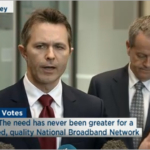
How do Labor and the Coalition differ on NBN policy?
The NBN has been a key issue in the past two elections, so will Labor’s new policy be a vote winner? The policy to move back to FTTP provides a clear differentiation from the Coalition’s FTTN-centric strategy.
Where’s the NBN policy?
All of this leads to interesting questions about just how vertically integrated a company has to be in order to be considered in the same basket of market power as Telstra. If such a vertically integrated TPG existed, would the government then need to structurally separate them as well?
As laptop scheme ends, what next for families and learning?
The computers for schools program, which involved federal funding for the supply of laptops to high school students, is set to end in June. The program was a central piece of the former government’s “digital revolution” but is being discontinued by the current government. The end of the program is already having consequences for schools and for families.

Commonwealth Bank gets on board with the blockchain
In an attempt to ride the tsunami of disruption that is reshaping the financial services industry, Commonwealth Bank of Australia has joined forces with eight major banks to develop applications based on blockchain, the technology underpinning Bitcoin and the other cryptocurrencies.

Will Australia meet its April 2014 Open Government commitment?
Will Australia join Russia, becoming the second nation to withdraw? Or will it simply delay membership - one year, two years or more? Perhaps we'll find out with a government announcement in the next month regarding its OGP commitment. Or perhaps all we can expect is ongoing silence.
In defence of Turnbulls’ NBN speed claims
Those blinded by Labor’s glitzy NBN vision need to rub their eyes for a second and realise that Malcolm Turnbull knows what he is talking about when he says there are few consumer applications which require the kinds of 100Mbps speeds which the fibre network will provide.
Atkinson: Are gamers celebrating too soon?
It may take another couple of elections before those in favour of game censorship run out of credits.
Quit yammering and learn to love the NBN
This article is by Darryl Adams, a government worker and internet tragic. A former IT worker, he still pines for the days of IBM...
The datacentres that ate NSW
Cloud computing: Surely it is time for some fresh thinking in NSW government procurement – as taxpayers, don’t we deserve it?
Picking apart the Coalition’s NBN misinformation
Whether or not any of us is a supporter of the NBN, I think we as the Australian people would be much better served by some fair and reasonable debate based on facts, rather than the spewing out of inaccurate, and misinformed spin! Where do they get such dumb ideas?
Conroy’s time as Comms Minister is coming to an end
There are very good reasons to suspect that Stephen Conroy's reign of fire and blood as Australia's Communications Minister is rapidly coming to an end; with the nation to receive new talent in this crucial portfolio at the next Federal Election -- or even substantially before it.
History repeating: Five ways data retention is like Conroy’s filter
Like history repeating, the Australian Government just keeps on coming up with disturbing new ways it wants to control and censor the Internet. Here's five ways the current controversial data retention proposal is similar to its predecessor in infamy: Senator Conroy's mandatory ISP-based Internet filter, which was shot down in flames in 2010.
Forget 3DTV … buy an IPTV instead
If there is one thing I am sick of, it is receiving proud press releases from TV stations and manufacturers about how they have created some tiny piece of obscure content in three dimensions.
Turnbull’s new NBN policy is 90 percent win
Yesterday Malcolm Turnbull did exactly what a Liberal shadow minister should do: Present a credible, fiscally responsible and less disruptive alternative to a big-spending and over the top Labor project which since it was unveiled in 2009 has been the policy equivalent of using an elephant gun to kill a house fly.

Apple iTax: Made in Ireland, designed in the US
Apple, famous for its innovative products, is equally creative in its tax structure. From 2009 to 2012, it successfully sheltered US$44 billion from being taxed anywhere in the world, including sales generated in Australia.
Will smart meters benefit consumers?
There are pros and cons of all forms of roll-outs. Network led geographic roll-outs may offer economies of scale but retailer led roll-outs may allow for more effective targeting of smart meters (for example, large users could get meters first). Whoever rolls out smart meters however, it is the consumer who will pay the costs. Consumers, therefore, should see some benefits.

A shake-up in Australia’s busy TV industry as Quickflix calls in the administrators
If Quickflix does fold or get absorbed by another local service, how many local services will survive? We may also see global VoD services taking over the local services.
The ACCC is falling too far in love with the NBN
In rubber-stamping the uncompetitive $800 million deal which Optus has signed with NBN Co, the national competition regulator has signalled a disturbing loss of independence and an obsequious willingness to make the Federal Government's National Broadband Network project succeed at all costs.
If Nicola Roxon doesn’t believe in her own policy, why should we?
Contrary to utopians such as Julian Assange, there is a place for secrecy in national security. But we need to be able to trust the spooks and police. Proposals that are vague, extraordinary and unsubstantiated do not induce trust. Neither does an Attorney-General who confuses kite-flying with an own goal.
Oh dear: Filter issue dogs Kate Lundy
You can't blame Kate Lundy for trying. The Labor Senator is one of the most enlightened in her party when it comes to technology, and while she doesn't always agree with some of its policies, she tries to make the best of a bad situation.
Back off, AFACT: Changing the law is not the answer
The Federal Government should ignore the pathetic demands of the film and TV industry for new legislation to "exterminate" Internet piracy and fix the blatantly obvious problems with its commercial model, following its latest loss in Australia's High Court. Australia's copyright law works well as it stands, and does not need changing.
Refer the matter to an “Online Retail Forum”?Yes, Minister.
As a complete waste of time, as Sir Humphrey would no doubt say, Conroy's Online Retail Forum will be a stunning success. I'm fairly sure that everyone's answer to whether or not it should be held will arrive shortly: "Yes, Minister".
Online GST push places an unfair burden on pop culture lovers
Will the long tail of the internet be docked by the fastidious imposition of GST to online purchases?
Is Nintendo being too harsh?
All I’m saying, Nintendo, is that the law and order thing is fine … but maybe your princess is in another castle?

‘Cloud protectionism’? How about ‘consumer choice’?
The reality is, a huge proportion of Australians do not know they are using the cloud when they use services such as social networking, and do not know that much of their personal data is being stored overseas as a result. When they find out, they are not happy about it.
Media companies don’t get it: Open market = sales
The running gag on the interwebs is that Aussies are the best BitTorrent downloaders in the world. When will companies realise that there are people willing to pay for content, and that piracy is a market correction to supply an obvious demand?
Wardriving & surviving: Who’s using your Wi-Fi?
The Queensland Police wardriving effort is certainly not the first of its kind. In fact, wardriving has been occurring since the inception of Wi-Fi in the 1990s.
Government response to the Government 2.0 Taskforce Report – my thoughts
Overall, I give the response a good B+, though I think it could have been stronger in part with clearer commitments. It’s missing information on where the digitally disconnected are helped and connected with offline (Government 2.0, after all, isn’t just online), as well as concrete commitments with timelines. It’s also missing anything on measurement of success and how this will be done.
The need for speed: there’s still time to fix Australia’s NBN
A National Broadband Network (NBN) based on Fibre to the Premises (FTTP) was, and still is, the right answer for Australia’s broadband needs.
The lost cause of American political fact-checkers
“Everyone is entitled to his own opinion, but not his own facts.” — Daniel Patrick Moynihan.
Oh dear: Mark Newton’s epic government rant
Mark Newton's submission to the Cyber-Safety Committee is one of the most epic rants we have ever had the pleasure to read.
Labor hardly better than Opposition on tech policy
I feel obliged to point out that when it comes to having policies about technology, the Australian Labor Party -- the party which is currently governing Australia -- is little better than the Coalition.

Free to fail: Why corporates are learning to love venture capital
Opening a venture capital branch seems to be the new “thing” in the corporate world. While Telstra and Westpac are the new big national players, Google is clearly ahead of the curve, with two distinct venture capital firms: the newly launched Google Capital and the five-year-old Google Ventures. But why are so many companies, across a range of sectors, now running to open their own venture capital funds?
Macquarie opens kimono on IT operations
One of Australia's largest but most secretive IT end user organisations has this week given industry observers a tantalising glimpse of its broad IT strategy, including staff restructuring across the board, back-office systems integrations and offshoring moves.
Oh dear: Serkowski’s fighting words
Shadow treasurer Joe Hockey might have come out swinging against the Federal Government's internet filtering plans last week, but not everybody was impressed. Pirate Party Australia secretary Rodney Serkowski apparently thought Hockey's enlightened stance hadn't had the full force of conversion.
Forget it: Turnbull won’t return the NBN to a FTTP model
Prime Minister or not, there is simply no way that Malcolm Turnbull is going to reverse five years of bitter campaigning and return the National Broadband Network to its previous near-universal Fibre to the Premises model. So let’s give up hope on that misguided delusion right now and save ourselves a great deal of painful mental anguish.
Holy cow: The Frustrated State was funded in only a week and I’m still...
This book will be a major step taken by Australia's technology community as we reboot our politicians' understanding of technology policy. It will not be the only step, but it will be one of the first. I look forward to taking it together with all of you.

Breaking the rules: How NBN Co’s spat with Turnbull breaches all convention
Under extreme provocation by a hostile Opposition, the National Broadband Network Company appears to have broken convention and possibly regulations regarding the behaviour of government business enterprises. The question now is: How will its shareholder ministers deal with its clearly aberrant behaviour?
More blah blah blah: IT Advocate announced
The problems small and medium sized Australian companies face in winning Commonwealth IT contracts are as perennial as the grass. Two and a half years into a three year term and the Rudd Government solution is the appointment of a "respected industry figure" to "provide leadership."
Beyond Silicon Valley: Start-up hubs in Australia’s backyard
The next Atlassian could be started by a pair of Chinese students studying right now in Melbourne, or an Australian-born Vietnamese or Indian entrepreneur who can leverage transnational family connections and build a fast-growing company.
Conroy’s R18+ decision
A feeble Delimiter Friday afternoon attempt at humour, based on the Rage Guy and other memes floating around at the moment online.

Budget a harsh wake-up call for the tech sector
Listening to the shrieks and squeals of tech sector commentators over the past few weeks, you’d be forgiven for thinking Joe Hockey’s first budget contained nothing for the industry. A more measured inspection of the budget entrails and you will find the Coalition has delivered a lot. A lot of pain, and a lot of lessons.
Why AGIMO’s open source policy will change nothing
Open source does not fit the framework which proprietary vendors have painstakingly installed in the minds of organisations like AGIMO over the decades. It's taken time, but Microsoft already won that war.

Doctor Who? One small step towards innovation
Following the ABC’s announcement that they will be streaming timely content from the new series of Dr Who, I applaud the broadcaster for moving with public demand and technological advancements.
Kim Carr’s eBook working group is a joke
I couldn’t help but laugh when I read the list of industry luminaries who have earned a spot on Industry Minister Kim Carr’s illustrious strategy group to solve all of Australia’s electronic book problems.
Lotus fans: Show me the money or shut the hell up
If there is one thing I am absolutely sick to death of, it is the pathetic rantings of die-hard Lotus Notes fanboys about how technically superior their product is, and how everyone else who isn't drinking the IBM kool-aid are somehow "biased" and don't understand Notes' obvious superiority.
Should Victoria pay for injured man’s Wii?
Ridiculing the Wii Fit as a video game in 2010 just makes politicians look silly. My aching muscles and -- by now, no doubt -- millions of people around the world using the device to make their daily health just that little bit better would argue it is much more.
Can David Thodey escape his Big Blue shadow?
One cannot help but feel that there was a certain irony to David Thodey's life yesterday which must have been impossible for the Telstra CEO to ignore.
Reality check: Telstra’s P2P trial is no big deal
Those panic merchants jumping up and down screaming blue murder over Telstra's P2P shaping trial need to take a chill pill and go sit in the naughty corner until their blood pressure sinks a few points. The reality is that the trial isn't a big deal and it's certainly nothing out of the ordinary in the context of the Australian and international telecommunications sector.
Samsung beats Apple: But what does it mean?
Australian judges have responded quickly and intelligently. The courts have explicitly based their decisions on perceptions of community benefit and on a coherent interpretation of what the national Parliament, through the Patents Act 1990, wants the law to do. The latest decision shows that patent law is working, and working well.

‘Cloud’ is now mainstream in Australia’s banking sector
It's finally happened. After years of expressing concern about the privacy risks, regulatory challenges and technical inadequacies of the new clutch of technologies broadly known as “cloud computing”, Australia's financial services sector has embraced the new paradigm wholesale. It's about time.
Australia’s desktop PC paradigm is under siege
Right now chief information officers and IT managers right around Australia are facing a difficult decision regarding one of the most critical but also trouble-plagued segments of their IT infrastructure -- their desktop fleets.

Lock down cybersecurity or face another Heartbleed – or worse
The recently released Commission of Audit report recommends that the Australian government needs to become “digital by default”. The continued shift to digital service delivery is intended to reduce costs, improve quality of service and provide greater transparency. But it will also open up new vulnerabilities to cyber attacks that could be used to access secure and confidential data, compromise the integrity of trusted authorities and disrupt critical services.
Clueless Telstra iPhone buyers get what they deserve
Take some responsibility, people. It's only common sense to know what you're buying and what you're signing. It's not Telstra's fault that you're an idiot. So shut the frack up. OK?
Telstra’s NBN plans: Just universally awful
Telstra's National Broadband Network plans released today are the broadband equivalent of Kryptonite. With less choice, less download quotas and less value than any other provider on the market, but for a higher price, Telstra's NBN options do more than stink -- they glow with a sickly radioactive foulness and should be avoided at all costs.
Google has lost its startup culture … and its mojo
The departure of high-profile and long-serving senior managers Kate Vale and Lars Rasmussen from Google Australia this month represents more than just the typical losses of a couple of mid-level employees to greener pastures.

Good news, flyers: ‘Flight mode’ is safe during take-off and landing
Earlier this year, the US Federal Aviation Authority (FAA) put together a panel of aviation experts to look at whether personal electronic devices (PEDs) could be used on planes without compromising safety. The results are in: the committee is recommending that electronic devices – such as tablets, e-readers and other PEDs – be allowed during all phases of flight (including take-off and landing).
Oh dear: Conroy gets mashed up
In the absence of any statement from Communications Minister Stephen Conroy about yesterday's Prime Ministerial leadership spill, iTNews.com.au has mashed up a bunch of existing Conroy statements into this intriguing video.
NBN: Sorry Mr Hockey, you’re still wrong
Yesterday Shadow Treasurer Joe Hockey issued an extensive statement attempting to show that comments he had made about 4G mobile broadband having the potential to be "far superior" to the National Broadband Network's fibre had been taken out of context. Unfortunately, he only succeeded in digging himself a bigger hole.
Decentralised NBN key to unlocking bush potential
Decentralisation is the key to unlocking the potential of our regions while making life in both "Sydney and the Bush" just that little more bearable.
eBooks in Australia – What went wrong?
This article is by Darryl Adams, a government worker and internet tragic. A former IT worker, he still pines for the days of IBM...
Server vendors’ days are numbered
This week I had a conversation with an Australian chief information officer which I considered both profoundly interesting -- but also extremely disturbing.

At least two web browsers for every Australian desktop: It should be mandatory
In mid-2008, a government staffer at an employee town hall meeting being held by the US State Department got up to ask Secretary of State Hilary Clinton what appeared to be a rather unusual question for the venue. "Can you please let the staff use an alternative web browser called Firefox?" asked public affairs officer Jim Finkle.
Sir Humphrey Appleby on the internet filter
To understand the situation that we find ourselves in regarding the internet filter, we need to refer to the great political textbook of our age: Yes Minister/Yes Prime Minister.
I tried to buy a Samsung Galaxy Tab … but failed
The scene: Deep in the dungeon of a Federal Government agency. Our protagonist, a mild mannered government worker by day, intrepid reporter at night, sees the Delimiter article on Vodafone releasing the Samsung Galaxy Tab on this date! Hallelujah!

Unfixable: Time to ditch e-health record scheme
Federal health minister Peter Dutton has commissioned a review of Labor’s troubled Personally Controlled Electronic Health Record (PCEHR) project. It’s unclear whether the review committee is to decide whether to scrap the project altogether or to try and fix it. Hopefully it is not the latter because if the past year has taught us anything, it is that this is not a fixable problem. It needs to go.
Does the NBN even need a voice port?
If there is one thing which has always surprised me about the National Broadband Network project, it is the dogged insistence of the network's designers on building a legacy voice telephony port into what is supposed to be next-generation infrastructure.

One step forward, two steps back: Govt cloud policy displays classic ignorance
The Federal Government has taken many positive steps forward in the past year with respect to freeing up its departments and agencies to adopt the new class of cloud computing technologies. But the release of an overly bureaucratic policy this month on offshore data storage has the potential to set that progress back substantially, relying as it does on several outdated concepts of risk management in IT projects.
Gershon funds must remain quarantined
The Australian ICT Policy Reform online petition is seeking support from the Australian ICT industry to call on both the Gillard Government and the Opposition to maintain quarantining of the agreed savings identified as a result of the Gershon review. These funds should remain available for re-investment by the Australian Public Service to enhance existing service delivery for all Australians and provide an opportunity for ICT driven innovation within the public sector.

2014 will be the NBN’s first and last great year
With hundreds of thousands of new fibre premises scheduled to come on line and thousands of others opened to wholesale access, 2014 is slated to be the long-awaited first banner year that will see all of the National Broadband Network Company's hard work finally start to pay off in bulk. But unfortunately it'll also be the last, as the Coalition's plan to rip apart Labor's NBN vision starts to takes effect 12 months down the track.
Four Corners report short on technical detail
When is Australia's technology sector going to get the full picture on what went on at BHP, Rio Tinto and Fortescue?

Australia’s got ICT talent: So how do we make the most of it?
AUSTRALIA 2025: How will science address the challenges of the future? In collaboration with Australia’s chief scientist Ian Chubb, the Conversation is asking how each science discipline will contribute to Australia now and in the future. Written by luminaries and accompanied by two expert commentaries to ensure a broader perspective, these articles run fortnightly and focus on each of the major scientific areas. This instalment takes a look at ICT’s role.

MTM broadband plan a “dog’s breakfast”, says Budde
Respected telecommunications analyst Paul Budde has heavily criticised the Coalition's new preferred broadband deployment model, describing its "Multi-Technology Mix" approach as "a dog's breakfast" of different technologies, which could turn out to be a "logistical nightmare" to deliver in practice.
Turnbull’s Quigley slander is flatly offensive
Malcolm Turnbull’s dogged attacks on the highly capable and transparent chief executive of the National Broadband Company are without basis and run contrary to the Shadow Communications Minister’s public call recently for truth, leadership and responsibility to re-enter Australia’s political sphere.

The ABC must now deal with its NBN problem
Over the past month, the evidence has become overwhelming that the ABC is actively censoring coverage of the National Broadband Network issue in a way that runs counter to the public interest. The broadcaster must now face the issue squarely and deal with it head-on, or run the risk of losing credibility with its highly informed and vocal audience.
Huawei & the NBN: Beware the CCP’s long arm
Huawei Australia’s local company men appear to have little idea of how China’s political economy, the Chinese telecommunications sector, or the Shenzhen-based parent company operates.
Fair suck of the sav, Blizzard
Blizzard, I suggest that you need to put at least one character in StarCraft II with an Australian accent. The Protoss seem a bit up themselves and the Zerg are quite weird, so it would have to be a Terran character.
Conduct unbecoming: How NBN spite has damaged the Turnbull brand
Many Australians believe the man dubbed the Earl of Wentworth will eventually be back to take the Prime Ministership, after being ousted from the Liberal leadership in December 2009; or possibly to become Australia's first President. But three years of dogged and at times spiteful opposition to one of Australia's most popular policies have taken their toll on Malcolm Turnbull in the view of some segments of the Australian population.
Oh dear: Meter Maids heat up Tech.Ed
Meter Maids attend Tech.Ed.
When does technology fade into the background?
Sometimes it’s time to let things go and stop treating them as unusual just because they involve a certain type of technology.
Could Internode buy iiNet? On paper … maybe.
Could Internode buy iiNet, now that Amcom is divesting its 23 percent stake in the Perth-based Internet service provider? On Monday I said no, but some readers questioned that view. So let's take a closer look at the possibility. Hell, it's likely still a pipe dream, but it's fun to speculate!
Why I didn’t expect AFACT to appeal
The plot of AFACT vs iiNet is very similar to that of gritty Baltimore drama The Wire -- only without so many guns.
Five ways the NBN is better than Google Fiber
This week Google finally launched its Google Fiber service in the US. But don't be lured by the company's sweet, sweet promises of cheap, unlimited fibre broadband to your home. Australia's National Broadband Network will be five times as good as Google Fiber. And here's why.
NBN: Who will be connected last?
Now that Labor's ambitious National Broadband Network project has finally cleared all of the regulatory, commercial and political hurdles that have stood in the way of its path to universal bandwidth nirvana, it's time to ask the most important question of all about the project. Who will be connected last?

Australia desperately needs a good technology policy think tank
The past decade or so of failed technology policy in Australia sharply demonstrates the need for an independent think tank that would focus on developing viable, sustainable and popular technology policy and feeding it into the political process.
How seriously should we take Ruslan Kogan?
As we said before, Ruslan Kogan is a talented, visionary and successful entrepreneur who deserves our attention. But the events of the past few weeks have demonstrated we simply cannot take the maverick businessman at his word -- because he has done little over the past week to back up some very large and very public claims with hard evidence.
Anti-NBN junkies need to go to rehab
Like the junkie who can't quite quit their harmful habit, the haters of the NBN project just refuse to give up the object of their fervent hatred, fumbling around in the dark continuously for their next fix; the next flawed argument that might just prove once and for all that the project is a dud.
Oh dear: Telstra comes to the mountain
It's safe to say that Australia's largest telco Telstra hasn't exactly had the *best* of relationships with the fiery denizens that reside in the deep and swirling waters known as Whirlpool. And who can blame it?
NBN study release a major Greens victory
It is perhaps fitting that as Minchin is leaving the stage, Greens Senator Ludlam is emerging as the defacto Shadow Communications Minister, in the absence of Opposition will to engage in the portfolio.
I hate you Telstra … more than Steve Jobs
This article is by Darryl Adams, a government worker and internet tragic. A former IT worker, he still pines for the days of IBM...
Private cloud ball is now in IBM’s court
There is one factor which IBM's cloud computing strategy appears to be lacking at the moment.
How long can Atlassian stay Australian?
We're not going to build a great Australian technology sector if we constantly have our eyes tuned towards the Silicon Valley stars and our hearts tuned towards the pages of the Wall St Journal and TechCrunch. That can only be done if we reinvest constantly in the Australian market, base our companies here, refuse to be acquired by US multinationals and maintain the Australian rage.
Optus’ NBN deal gives it an unfair advantage
Optus' $800 million National Broadband Network deal is an unnecessary and unsavoury sweetheart arrangement which smacks of favouritism and will deliver Optus a war chest with which to attack smaller rivals like iiNet, TPG and Internode; rivals which will not be paid to migrate their customers onto the NBN.
Oh dear: The iAbbott cometh
Ah, YouTube. We love you so.

Australia’s biggest ‘China threat’ is not Huawei, but itself
What we should really learn from the Huawei ban is that the biggest threat to Australia’s future development is not Chinese firms such as Huawei, but Australia’s own poverty in high-tech capability, and in understanding China.
R18+ game classification: The quest continues
The battle for an R18+ classification for videogames in Australia has been something of an epic, but the journey’s not over yet. There are still plenty more rocks and potholes to navigate before we start seeing R18+ games in local stores.
Conroy vs Lundy: A 14-year comparison study
It's important to look back at the history since Conroy and Lundy both joined the Senate in 1996 to learn why one has maintained a strong reputation in Australia's technology sector while the other is having theirs torn further into shreds every day.
Oh dear: Phil Burgess is … totally a bikie
We knew that former Telstra group managing director of public policy and communications Phil Burgess -- one of former CEO Sol Trujillo's team of 'amigos' had taken a trip with his son on Harleys during a US spring break. But we didn't have the evidence, until now.
Australian IT security firms should stop scaremongering
I was disappointed yesterday morning to read yet another scaremongering plea for business dressed up as an informed commentary piece by a high-profile member of Australia's IT security community.
Why DRM hurts eBook sales: A piracy analysis
Piracy of eBooks is real. It is also an element of the marketplace and is market forces at work.
Not the Twitter election you were expecting
Now that the phoney war has ended and the real Federal Election is in full swing, mainstream media and blogs are debating if this will be the 'Twitter election' or some other flavour of social media revolution. I argue that it will be, but not the way the pundits are postulating.

Please accept my apologies: I was wrong about Malcolm Turnbull
I am here today to formally apologise. I was wrong to have faith in Malcolm Turnbull and the Coalition on this issue. You were all right. Turnbull does indeed appear to be attempting to "demolish" the NBN.

Broadcast to Chromecast – is TV being recast or cast out?
I expect more from the biggest screen in my house and, once again, traditional mass media have failed to deliver.

myGov has potential but is far from finished
MyGov – or something like it – is part of a 21st century government. It is the way of the future. But it needs careful development, testing, and selling.
NEHTA — On the road to nowhere?
The NEHTA plan, as it stands will deliver fragile single purpose interconnectivity with little or no interoperability ... As it stands they are on a road to nowhere. We have been down that road and we know where it leads.
Memo to Minister Turnbull: NBN dissent is “democracy”
Communications Minister Malcolm Turnbull needs to stop engaging in attacks on those who support a Fibre to the Premises model for the NBN and commit to an open and transparent review process for the network, according to telecommunications blogger and IT technician James Archer.
BlackBerry tablet too little, too late for corporate Australia
This is the reality that Blackberry maker is currently facing in the Australian marketplace. Its products are no longer considered hot in the minds of executives in either the business or government sectors.

How the NBN could boost Australia’s GDP by 2 percent
This article is by Leith Campbell, Honorary Fellow, Melbourne School of Engineering and Sascha Suessspeck, Economist and Ph.D. Electronic and Electrical Engineering student, both...
iPhone 4: Is a Telstra plan worth the money?
There is only one question that wannabe iPhone 4 owners need to ask themselves when gearing up to buy Apple's hyped handset when it launches in Australia at midnight Thursday night. Can you afford to pay Telstra's exorbitant prices for access to its superior network?

Is the Govt’s missed e-health target meaningful?
We could question whether there are not better things within the health system that the nearly AUS$1 billion spent so far on PCEHR could have been spent on.
Education the key as Reinecke echoes Gershon
In Australia, as the Reinecke Report is digested, it’s time for us to get serious and undertake the significant cultural and behavioural change that Gershon specified, and the first step in any change is education, for all players.
Dark day for the ACCC as it abandons competition
The Government and the NBN Co have decided to use our taxes to buy out Optus' competition just as they have done with Telstra’s HFC. A black day indeed for the ACCC and competition in Australia.
Anti-piracy scheme throws users to the legal wolves
The anti-piracy scheme proposed by the ISP industry this afternoon as a response to online copyright infringement through platforms like BitTorrent opens the door for content owners to start taking hundreds of thousands of Australians to court for minor offences such as downloading a handful of films or TV episodes.
What’s your favourite beer?
Over on the Delimiter forums, talk of the National Broadband Network has quietened down while another, far more serious issue has been being debated since last Friday afternoon: What is everyone’s favourite beer? And judging from the results, you are all a bunch of picky bastards with expensive tastes.

Freelancer’s IPO and the new tech millionaires
Freelancer, the online freelance and labour market site has issued its prospectus ahead of a listing on the Australian Stock Exchange (ASX).

Why major IT projects fail: A basic primer
New South Wales' outgoing auditor-general has published a brief whitepaper outlining the major causes of project failure in the state government and what can be done to address the issue, specifically calling out IT projects as having a bad track record in the area.
Oh dear: Kogan’s all-out war on Harvey Norman
Not content to have successfully lampooned Labor's mandatory internet filtering project, the bad boys at Australian electronics manufacturer Kogan have taken aim squarely at Harvey Norman. Mumbrella points out the company is planning a satirical advertisement aimed at the retailer.

Was the Coalition’s Huawei debate just political theatre?
If you believe everything you read, over the past several weeks a ferocious debate took place between senior Government Ministers about whether Huawei should be allowed to bid for National Broadband Network contracts. But the discipline and unity historically displayed by Tony Abbott's Cabinet hints at a more nuanced process, and one that may have all just been for show.
Basic Govt IT needs a fundamental rethink
Government systems could be redesigned from the ground-up to make it easy to reorganise, merge and demerge departments, so that a person's email system can be rapidly and easily moved from one agency to another, or the HR information of two departments can be consolidated in a merger at low cost.
Why Delimiter is launching a forum
We have decided to keep the Delimiter forum and attempt to post content in it to attract users so that many more topics and many more Australian voices are heard. As always, it'll be a work in progress -- let us know what you think and what you want from it!
Oh dear: Optus’ “theatrical” 3G USB modems
We have always known Optus was a big fan of the higher forms of performance art, with its sponsorship of the Cirque du Soleil and even the penchant of its chief executive Paul O’Sullivan for cracking Telstra jokes on stage. But we didn’t know that even its USB modems were involved in the performance.
Gigabang for your buck
This week Fairfax reported on Australia’s broadband pricing “war” in an article appearing in both the Sydney Morning Herald and the Age. The chart .... shows the pricing of a number of broadband internet plans offered by the four largest internet service providers (ISPs) in Australia.
Pirate Party ACT registration not a failure
Pirate Party Australia failed a recent attempt to register their Australian Capital Territory branch. But media reports about the issue don't tell the whole story.
The end of the Wii era
Nintendo's Wii is dead. OK, hyperbole check. It's still kicking mass-market butt, actually. But that's not going to last much longer. So allow me to rephrase: Nintendo's Wii will be dead by the end of this year.
Dogmatic: MPs’ tech tours merely reinforce existing prejudices
The fundamental aim of overseas study tours undertaken by Members of Parliament is to help educate and give our political leaders a broader context within which to make better policy decisions, as well as opening substantive policy discussions with high-level figures. But the latest examples this month in Silicon Valley and other trips over the past several years starkly display the fact that in practice, that they merely serve as propaganda and to reinforce existing beliefs arrayed along dogmatic political lines.
Linux to dominate Australia through T-Box and Android
In only a couple of years, millions of Australians will directly be using the open source Linux operating system in their everyday personal and professional lives.

Getting away with blue murder: How the NBN distraction is covering Telstra’s crimes
Under the cover of the NBN's madness and media hype, there's another high-wire act under way: The nation's other telco monopolist, Telstra, is successfully concentrating its market power; and that's not good news for anyone.
R18+ rating added for videogames … but are children protected?
New guidelines for the classification of videogames have been released by Federal Home Affairs Minister Jason Clare and, despite being a step in the right direction, the revisions are largely disappointing and a missed opportunity.
The NBN, service providers and you … what could go wrong?
The NBN will provide Australians with a raft of exciting new opportunities. For services providers, it will provide a much-needed chance to improve their customer relations and procedures. And who wouldn’t welcome that?
Senate circus shows politics has no place in NBN
As Stephen Conroy interrogated the incoming NBN Co chief Ziggy Switkowski in last week’s Senate hearing into the network’s rollout, it became increasingly clear that politics is getting in the way of good policy.
US ‘choke-points’ for Australian telecoms data are no surprise
So, what can we conclude from the latest developments? There are no real surprises. We know that lawful interception has been a highly valued (if at times shockingly misused) tool of law enforcement and intelligence agencies for decades. Perhaps the most important conclusion we can draw is that the law enforcement and intelligence agencies will not surrender such access easily.
Election rant 2: NBN Co’s outrageous Labor favour
During an election, public servants had better keep their head down -- unless they want it to be chopped off.