

analysis One of Australia’s largest but most secretive IT end user organisations has this week given industry observers a tantalising glimpse of its broad IT strategy, including staff restructuring across the board, back-office systems integrations and offshoring moves.
It’s one of Australia’s largest financial services organisations and investment houses, but to the public — and even many of its own staff — Macquarie Group has always remained something of an enigma.
Those of us who’ve spent any time perusing the pages of the Financial Review or hanging out in the financial district of downtown Sydney will be familiar with the company’s reputation. Courtesy of its private banking operations, the organisation holds the fortunes of many of Australia’s richest individuals. Courtesy of its consultancy division, its hands had been involved in many of the nation’s largest corporate transactions — mergers and acquisitions. And courtesy of its stock exchange trading operations, it’s the first port of call for many Australians who love a punt on the sharemarket.
Perhaps most of all, it’s known for being Australia’s ‘millionaires factory’ — working at Macquarie, for many people, is a quick path to complete financial security.
But not much is known about what actually goes on within Macquarie. The company’s strictly separated divisions are literally separate companies in many cases. Employees are usually sworn to strict codes of secrecy and the group has a troublesome habit of declining press inquiries about its operations.
That aura of mystery extends to its IT operations. Over the past half-decade I’ve tried to interview the group’s long-serving chief information officer Nigel Smyth a number of times, but failed. Macquarie rarely issues any media releases about its IT operations, and I’ve never seen a press release from a vendor touting the company as a customer. Leaks are virtually non-existent.
However, if you peruse the pages of the group’s operational briefing (PDF) this week presented to analysts and investors, for the first time in years, you’ll be able to get a rough outline of what’s going on at Macquarie when it comes to technology. The key sections are those presented by Greg Ward. The executive is labelled in the documents as ‘deputy managing director’ of Macquarie Group itself, but Ward is actually more than that. He’s also chief executive of the Macquarie Bank division and has for many years been the bank’s and wider group’s chief financial officer.
At the moment, if you look through Ward’s presentation, it seems as if the executive is fulfilling more of an operations role for Macquarie. And if you look at Macquarie’s organisational chart, it’s also apparent that he oversees the bank’s technology support division — which the bank’s chief executive Nicholas Moore does not have a straight organisation line to.
Macquarie’s technology support division used to be called its Information Services Division (ISD). However, from Ward’s presentation this week, it seems apparent that the group has followed other major Australian banks and morphed ISD into a merged operations and technology division, representing their increasingly integrated nature.
In Macquarie’s case this division is called ‘Market Operations and Technology’ (MOT), and according to Ward’s presentation, it’s becoming a bit of a beast.
It looks like MOT’s formation dates back to 2010, when separate divisions Macquarie Securities Group and the Fixed Income, Currencies and Commodities group started sharing some back-office systems and data, as the pair moved towards a single view of clients’ financial resources. At that point, it looks as though Macquarie was also trying to consolidate some IT systems. I don’t know precisely what those systems do — but Ward lists them as ‘CONNECT, FIDESSA, Calypso, MTS and market data’.
The next stage took place in April 2010, when other systems and functions were consolidated into a new unit, the Market Operations Division. The driver at that point was to combine overlapping back office functions so Macquarie as a whole could reap efficiency benefits. By this stage, Ward’s presentation notes, the bank had racked up $28 million in savings.
Following that point, in December last year, the IT teams of MSG and FICC were merged, and the group started looking at using “lower cost locations” for some IT work. At another point in the presentation, it’s mentioned that Macquarie is using Manila in the Phillipines for IT development work (which we kind of already knew, due to rumoured job losses at Macquarie last year), although MOT is still quite large — with a combined headcount of some 3,500 staff. In total (across finance, technology, HR and business services), the group has over 1,000 offshore staff.
And the next stage is to leverage the combined MOT team across the other Macquarie divisions — with Macquarie Capital looking to be next, with integration occurring through the 2013 financial year.
So what does all of this mean? To my mind, it represents a fascinating shift in the Macquarie Group mindset.
Previously, it has been my impression that most of the group’s divisions attempted to be quite self-sufficient. This has been useful in maintaining the cut-throat competitive internal culture at the group, as well as maintaining so-called chinese walls between divisions when necessary. You don’t want a division aiding with secret M&A deals to be chatting casually with the staff in your equities trading division, for example.
However, it looks like Macquarie is currently trying to shift its administration footprint into being much more comprehensively cross-division, with IT as a core enabler of that shift. This is likely, of course, to bring the group significant efficiency dividends, as Ward mentions. However, it is also likely to give it a better view of its customers and a much more cohesive dataset about financial movements in Australia as well.
As its momentum in this area gathers pace, I would also expect Macquarie to run into some speed bumps. Because of the highly specialised nature of its business — even more specialised than the operations of major banks like CommBank and NAB, for example — Macquarie is likely to be currently running all kinds of niche financial software applications, and probably even quite a high degree of custom and in-house developed apps.
With several decades of that development work behind it, and with its divisions having previously operated on a more siloed basis, I would guess that integrating some of those IT systems will prove a lot more problematic than Ward would let on publicly. I’m also betting that some of them won’t end up being integrated — but rather just segregated off into convenient virtual containers, to keep running as they are.
One last thing: It’s interesting to see the difference in attitude between Macquarie and some of the other large financial services organisations when it comes to technology. The emphasis for Macquarie right now definitely does not appear to be on using technology to drive positive revenue and customer service outcomes for the group, as it is at CommBank. It appears to be more on the side of gaining efficiency dividends and taking cost out of the business. None of that is to say that positive technology improvement isn’t going on. But it’s not where the overall focus of the group is.
Regardless, as it is in Australia’s other major financial groups, technological change is definitely in the air at Macquarie. It will be fascinating to see what other tidbits of information escape from the mothership over the next year, after the unexpected treasure trove which Ward gave us this week.
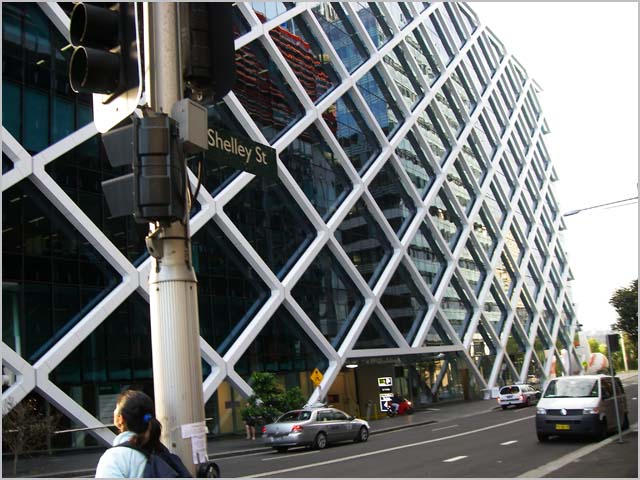
Image credit: derivativeofcourse, Creative Commons
Wow, interesting article Renai. I worked at Club Mac for a couple of months full-time as a student in what was the Treasury and Commodities ITG (not sure what that is now). There were some seriously smart and dedicated IT people. Can’t say if that was unique to Macquarie I’ve ever worked at any other finance companies.
Definitely were those Chinese walls; the groups were self-sufficient, even in IT. That was in 2008. Looks like its changing.
When i think of evil corporations in Australia. Macquarie is at the top of the list.
Comments are closed.