news Tasmania’s Labor Premier has praised NBN Co for adopting a universal ‘opt-out’ model for the deployment of its fibre to premises around Australia, and sharply criticised what she said was the “politically motivated” opposition of Coalition-dominated State Governments to the plan.
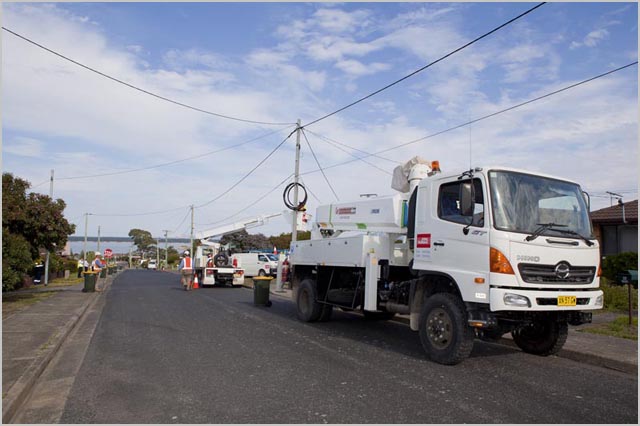
NBN Co’s approach to its infrastructure deployment around Australia has so far consisted of two different methods. In states such as Tasmania, the company has been connecting home and business premises to its NBN fibre by default when it deploys infrastructure in their street; at no cost to the premise owner. The premise owner must actively choose not to receive the infrastructure if they don’t want it. This is known as an ‘opt-out’ approach.
However, in some other areas, the company has been pursuing a so-called ‘opt-in’ approach, where premise owners must actively choose to have infrastructure connected to their premises. This has been the approach preferred, for example, in Victoria, where the Coalition State Government has repeatedly stated that it doesn’t want premises connected to the NBN by default.
Last week, NBN Co chief executive Mike Quigley revealed the company had standardised its approach nationally and moved toward what he described as a “build drop” system, where it will connect premises by default to its fibre as it rolls out its infrastructure down streets. The move was immediately reportedly challenged by the Coalition Governments of Australia’s three largest states, with the Financial Review reporting that Queensland Campbell Newman, NSW’s Deputy Premier Andrew Stoner and Victorian Technology Minister Gordon Rich-Phillips had all called for the opt-out model to be abandoned and replaced with the opt-in model.
In a statement released on Friday, Tasmanian Premier Lara Giddings, whose state pioneered the opt-out model under previous Premier David Bartlett, criticised the rejection of the opt-out system by the Coalition State Governments on the mainland. “I note that Liberal Premiers interstate have indicated their opposition to opt-out provisions,” Giddings said. “I would urge them to cease their politically motivated opposition to this nation-building reform and embrace the opportunities that a broad take-up of the NBN will provide.”
Giddings welcomed NBN Co’s decision to focus on an opt-out model, and said she anticipated that it would assist in the take-up of the NBN’s “revolutionary” new technology. The Tasmanian Premier said Tasmania was determined to make the most of its first-mover advantage — with the state being a key first rollout zone for the NBN.
“By 2015 all Tasmanian households and businesses will have access to either optic fibre of high speed wireless – a full five years before the rest of the country,” Giddings said. “The $300 million contract for the final stage of the roll-out will see the creation of up to 800 new jobs in the construction phase, not to mention the broader economic opportunities that will be created.”
Giddings’ comments echo previous criticism of the Coalition states’ preference for an NBN opt-in model.
In June 2011, former Tasmanian Premier Bartlett described the decision by Victoria’s State Government earlier that year to pursue an ‘opt-in’ policy regarding connecting residents and businesses to the NBN as “very short-sighted”, arguing for much broader government engagement and focus on the network to maximise its positive outcomes. “Every state needs to start taking this seriously,” Bartlett said said, arguing that Australia needed to “take the politics out of the NBN”, despite the “patchwork of liberal and labor states” which Australia was currently experiencing.
In addition, an extensive survey of broadband users by online forum Whirlpool published in April 2011 found that most supported the ‘opt-out’ approach to rolling out the National Broadband Network, and that overall sentiment towards the NBN policy as a whole had rapidly improved over the previous several years.
Whirlpool’s survey was taken by some 23,513 individuals, most of whom rated themselves as either a guru, power user or at least ‘confident’ when it came to technology. Many of them worked in the technology sector, either as an IT manager, admin, developer or support agent. According to the survey results, 45 percent of the respondents noted they supported the opt-out policy, with 20.1 percent against, and the rest either undecided (17.7 percent) or not knowing what the policy was (17.2 percent). In addition, just 3.5 percent of respondents said they would ensure their house was opted out of the NBN when it was rolled out to their area.
Australia’s peak technology industry representative group has also previously sharply criticised Victoria’s Coalition Government for its decision to reject an ‘opt-out’ approach to rolling out the National Broadband Network in the state in favour of requiring residents and businesses to ‘opt-in’.
“An opt-in approach to NBN take-up will almost certainly delay the broader community, and ultimately the national benefits that can be delivered by ubiquitous take up of high speed broadband,” then-Australian Information Industry Association chief Ian Birks said in December 2010. “Arguably, those who are least informed and most disconnected will be disadvantaged the most – and everyone will be subject to unnecessary administrative red tape, which is itself a disincentive to take-up.”
opinion/analysis
Last week’s divided opinions regarding NBN Co’s new ‘opt-out’ national policy could not have given a clearer indication that the current NBN debate in Government is based along political lines — and not what is actually the right telecommunications solution technically or the best solution for residents and business owners in each respective state.
It strikes me as hilarious (in a very sad way) that the Coalition States are so strongly critical of the NBN while the Labor States are so strongly for it. The truth of what is better for Australia or more popular amongst the general population doesn’t seem to matter to these politicians — instead, it seems to be all about how much they can criticise their rival parties to continue to ensure their control over their respective government. I call upon all concerned to start looking at the situation objectively and not along party lines.
Why, after all, would anyone in their right mind reject a free fibre-optic broadband connection to their home or business premise, when it’s being deployed at no cost to them, even if they don’t plan to use it? The answer is, as the Whirlpool survey clearly showed, that they wouldn’t.
Image credit: NBN Co