

• Free CIO-level whitepapers


    [ad] Check out these whitepapers published by IDC and HP to help you make tough decisions about your IT environment.

    Leveraging the Always On support experience for IT transformation: This IDC whitepaper outlines the importance of support services in IT environments. IT organisations are now required to support everything from legacy systems and storage to virtualised configurations and cloud-based computing in complex, heterogeneous environments. The increasingly critical role of vendor-supplied external support services is discussed and highlighted in addressing these emerging IT environments going forward.

    Conquering the challenges of data center complexity: Virtualisation and cloud are two popular IT trends that lower costs and make computing more secure and efficient. However, they also add complexity. Read this thought leadership paper and learn new ways to conquer your data center complexity challenges.

  • Great articles on other sites
  • RSS Delicious/delimiterau


  • Save $200 on HP ProLiant Servers


    [ad] The HP ProLiant ML110 G7 is the ideal server for a growing business. These servers are preinstalled with Microsoft SBS 2011 Standard Edition so you can hit the ground running. Grab this coupon and save $200 each on each server, up to a value of $1,000 per company.

  • 5 months FREE on phone system rental


    [ad] Rent a new phone system and connect your phone lines with Commander to receive 5 months rent free. Why rent with Commander?

    -Tailored complete solutions
    -Great offers from leading phone system brands
    -Rental & communication on a single bill
    -Renting systems conserves cash flow

    Hurry – act before 30 June!

  • HTC One X launch special


    [ad] Vodafone has launched HTC's new flagship One X phone in Australia with a launch special of up to two months' free access fees -- a total saving of up to $118 off. The One X is available starting at zero dollars upfront on a $59 a month plan. Click here to check out the details.
  • Featured, Opinion - Written by on Monday, July 12, 2010 10:39 - 2 Comments

    Conroy’s temporary filter all Australia needs

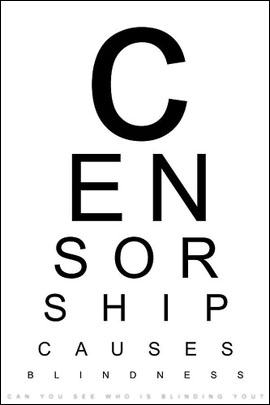
    opinion On Friday, three of Australia’s largest internet service providers simultaneously announced they would filter some internet content from ever reaching their customers.

    The news was greeted with a widespread lack of interest from an Australian population which – for almost three years now – has been steadfastly campaigning against the idea of its internet being filtered in any way. There was no outrage, no Twitter hashtag set up, no furious online debates, no calls for the Communications Minister’s head – in short, a deafening silence.

    The reason for this lack of outrage – the fact that the ISPs will only be filtering sites which host child abuse or child pornography material – should send Australia’s politicians a strong message.

    In short, most Australians concerned about the Federal Government’s controversial mandatory internet filtering policy – which last week’s announcement is a first, tentative step towards — are not overly worried about the technical fact that their internet may have some sort of controls on it, although of course some, including myself, are.

    Australians are, however, worried that those controls might extend too far and might start to impact on their freedom of speech and access to information.

    Take the example of some of the material that Communications Minister Stephen Conroy has consistently stated will be included in the Refused Classification category of content which the filter aims to censor. Included in that category – according to Conroy – is online material which relates to detailed instruction in drug use.

    Now under Australian law, several states consider use of a popular drug such as marijuana to be a criminal office. If you view matters in this light, it’s not hard to see why the Federal Government would want to ban any material which would inform people how to safely smoke marijuana, for example.

    However, when you widen your scope, you will quickly find that there are other states – such as the Australian Capital Territory, South Australia and so on – which have decriminalised the personal use (in small amounts) of marijuana, recognising that it’s fruitless to chuck a couple of teenagers caught rolling a joint into jail, and that vast segments of the Australian population consider the occasional puff completely normal.

    It’s a similar situation when you consider some other material which could be considered Refused Classification. Political web sites which lobby against abortion by publishing graphic photos of aborted foetuses. Websites which give detailed instruction in what is still considered a crime – assisted euthanasia of elderly Australians in extreme pain. Archaic manuals from the 1940′s which advise soldiers on how to make basic bombs. And so on.

    These are all examples of content which is on the borderline between objectionable and acceptable, depending on which Australian you talk to.

    What the lack of reaction towards the confirmation by Telstra, Optus and Primus last week tells us is that while it is debatable whether some categories of content should be kept from Australian eyes, there are some categories of content which we can all agree are out of line – with the most obvious one being child pornography.

    Communications Minister Stephen Conroy last week appeared to have acknowledged this fact by announcing a year-long review of the Refused Classification category of content. To my mind, this is the first confirmation from the Labor Government since the election in November 2007 that its hard line on “Refused Classification” content may not be in line with Australian norms.

    There is also another significant fact that we need to consider about last Friday’s announcement. Conroy did not mandate that ISPs sign up to filter child pornography and child abuse material. Instead, he gave them the option by making the decision to comply voluntary.

    Many ISPs appear to have yet to make up their mind whether they will follow the lead set by Telstra, Optus and Primus on the matter. And it is a virtual certainty that although many will do so, at least a few ISPs will decide that they don’t want to filter the internet at all for their users, and will abstain.

    What this gives Australians is options. If they are dissatisfied with the fact that an ISP filters their internet of certain content, they can complain directly to the ISP. If enough customers complain, an ISP may stop filtering the internet or provide ‘opt-in’ or ‘opt-out’ mechanisms. Or customers even have the option of switching to an ISP which does not filter content.

    Suddenly, this makes internet filtering a matter of personal choice rather than a matter of draconian government control.

    I am personally very much against any sort of mandatory ISP-based internet filtering. It has been demonstrated many times that such technology is incredibly easy to circumvent and as a journalist, I remain staunchly on the side of unfettered freedom of access to information in any medium. I am highly concerned that any form of imposed mandatory filter would inevitably lead to legitimate material being blocked — a phenomenon known as ‘scope creep’.

    I feel that Government resources in this area would be vastly better allocated towards the police, education and making PC-based filtering technology available for those who do want it.

    However, I have no real objection towards some ISPs in Australia voluntarily censoring child abuse and child pornography from the internet, especially if they provide opt-out options for those who would prefer their internet to be unfettered and for control to reside on the users’ PC and not in their ISP’s server rooms.

    Of course, there are many issues that would need to be debated about such a system. For starters, how do you avoid a presumption of guilt that those who ‘opt-out’ of having their internet censored at any level are potential criminals? And how do you ensure that scope creep doesn’t see extra, borderline categories of content added to the ISPs’ voluntary censorship lists as time goes on, or that legitimate sites are not censored?

    Research has consistently demonstrated that Australians don’t want their internet to be censored. But if the Government feels it must, let it learn a lesson from last week’s experience and change its policy towards one that is voluntary and only tackles a very limited field of content. That’s something we can all agree on.

    Image credit: Andréia, Creative Commons

    Related posts:

    1. Budget 2011: Filter grants cancelled
      due to lack of interest
    2. Voluntary filter: Why I’m dumping Telstra
    3. Voluntary ISP filter attracts global attention
    4. Telstra’s Interpol filter goes live
    5. Optus’ filter to go live later this month
    submit to reddit Print Friendly and PDF

    2 Comments

    You can follow any responses to this entry through the RSS 2.0 feed. You can skip to the end and leave a response. Pinging is currently not allowed.

    1. Posted 13/07/2010 at 12:08 am | Permalink | Reply

      There is also another significant fact that we need to consider about last Friday’s announcement. Conroy did not mandate that ISPs sign up to filter child pornography and child abuse material. Instead, he gave them the option by making the decision to comply voluntary.

      Another point is the ISPs that have announced they will voluntarily filter the Internet for their customers on a mandatory basis have said they will do it only after the government provides some legislative protection.

      Conroy has been a belligerent mofo, he has been laying the boots into ISPs for not “stepping up” and voluntarily filtering while talking to them about the legislative changes they would need to enable them to do exactly that.

    2. Politricks
      Posted 17/07/2010 at 11:10 am | Permalink | Reply

      Do not trust Conroy on this issue. Do you think there are 400 child porn websites out there? It seems highly unlikely, so how do we know what they’re actually censoring? The government wants control of incoming information, nothing less. Voluntary censorship is a false promise.

    Leave a Comment

    Comment

    Get our daily newsletter

    Get our new articles every day by signing up to our daily newsletter.

    Email address:


  • Anonymous tips

    Got some inside information on something that should be made public? Use our anonymous tips form. Even Delimiter won't have a clue as to your real identity.

  • Most Popular Content


  • Three lessons ING's private cloud teaches us
    sponsored post ING Direct recently implemented a private cloud solution to virtualise its entire banking platform, allowing it to provision a new copy of itself -- a so-called 'bank in a box' -- within minutes. Here's three things other organisations can learn from this interesting deployment.
  • Enterprise IT news & views

    • SAP’s SuccessFactors deploys Aussie datacentre successfactors

      SAP subsidiary SuccessFactors has opened a datacentre located in Australia from which it will sell its software as a service-based human resource management and business execution software to local customers, in one of the first known deployments of such dedicated Australian infrastructure by a global SaaS vendor.

    • Govt pushes ahead with cloud-sharing approach clouds1

      The Federal Government today revealed a standardised approach to sharing computing workloads between agencies, in a so-called ‘community cloud’ strategy that will attempt to leverage existing infrastructure operated by major departments such as the Department of Human Services to provide services to smaller agencies.

    • The ABC didn’t sack Bitcoin miner dollar-coin

      The Australian Broadcasting Corporation didn’t fire an un-named IT worker who attempted to use the broadcaster’s vast server infrastructure to make himself a fortune through the Bitcoin virtual currency system, it has emerged, with the employee merely being disciplined and having their access to certain IT systems restricted.

    • Victoria dumps HealthSMART e-health project pills-2

      The Victorian State Government has reportedly decided to walk away from its troubled central electronic health project HealthSMART, which has reached only a limited number of its goals over the past decade since it was initiated, despite soaking up several hundred million dollars worth of government funding.

    • HP completes giant new NSW datacentre 1

      Global technology giant HP has finished building its colossal $119 million new datacentre in Western Sydney and will launch the “world-class” facility next month, with a speech slated to be given by Communications Minister Stephen Conroy.

    • Microsoft beats Salesforce to utility CRM deal microsoft1

      Energy retailer Australian Power & Gas has picked Microsoft’s Dynamics CRM system over rivals Salesforce.com and Right CRM as the base platform for a customer relationship management overhaul to tackle incoming email complaints.

    • NSW finalises colossal datacentre consolidation cableguy

      The New South Wales State Government this week announced the Leighton subsidiary Metronode as the winner of its long-running and wide-ranging datacentre overhaul project, with the company to construct two new substantial facilities which will allow the state to consolidate its IT operations drastically.

    • Two good Australian CIO interviews IT-manager-cio

      There have been a couple of good interviews with Australian chief information officers done by various media outlets over the past couple of days — good enough that we thought them worth highlighting to readers on Delimiter.

  • Enterprise IT, Featured, News - May 23, 2012 12:54 - 0 Comments

    SAP’s SuccessFactors deploys Aussie datacentre

    More In Enterprise IT


    Analysis, Telecommunications - May 23, 2012 11:08 - 5 Comments

    The NBN, service providers and you … what could go wrong?

    More In Telecommunications


    Gadgets, News - May 21, 2012 12:32 - 5 Comments

    Galaxy S III listed for Telstra, Optus and Vodafone

    More In Gadgets


    Reviews - May 7, 2012 18:16 - 2 Comments

    Telstra Mobile Wi-Fi 4G: Review

    More In Reviews