

• Dynamics CRM Online free trial


    [ad] Microsoft Dynamics CRM Online is Microsoft's powerful customer relationship management software delivered as a cloud service through your web browser with pay as you go pricing. Click here to test it out with a free trial.
  • Windows InTune trial


    Windows Intune: Free 30-day trial


    [ad] Windows Intune delivers integrated cloud-based management and security for your PCs and staff wherever they are. Click here to get a free 30-day trial.

  • Great articles on other sites
  • RSS Delicious/delimiterau

  • Galaxy Nexus launch specials


    The Galaxy Nexus is the first Android handset to run Ice Cream Sandwich, and Optus, Virgin and Vodafone have launched it with specials ranging from $38 to $387 off, depending what plan you're on. Click here to compare the plans available.

  • What's the best Aussie iPhone 4S deal?


    It's not the iPhone 5, but Apple's iPhone 4S is still one of the hottest handsets of 2011. We've collated all of the iPhone 4S plans from Telstra, Optus, Virgin and Vodafone so you can compare which has the best value. Click here to check the options.


  • Need better broadband?


    If you're stuck on a crappy broadband plan, check out our broadband plan comparison site to find a better option. Mobile broadband, ADSL2+, naked DSL, cheap unlimited plans -- it's all there, in a nice tablet format. Click here to find a better plan.
  • Featured, News - Written by on Monday, March 8, 2010 15:45 - 1 Comment

    Fighting inequality, but celebrating: Women in ICT

    Hundreds of women in Australia’s technology industry gathered in Sydney today to celebrate International Women’s Day and pass on hard-won lessons from the front lines working in a sector which continues to be dominated by men.

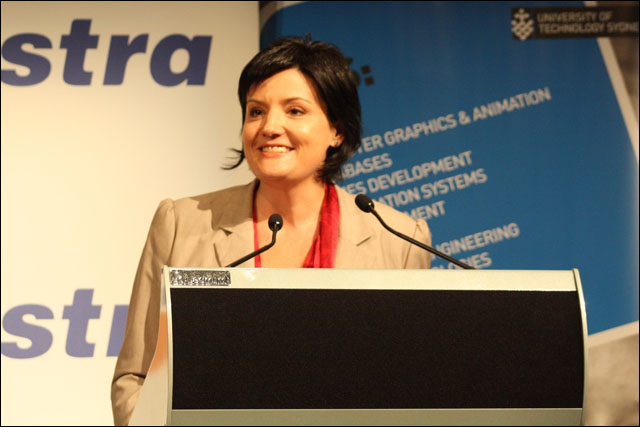
    NSW MP Jodie McKay (pictured), who among other portfolio responsibilities is the state’s Minister for Women, told a lunch held by Females in Information Technology and Telecommunications (FITT) at the Four Seasons Hotel that “worrying declines” had appeared in terms of women’s representation in Australia’s ICT workforce and in the ranks of those studying to join it.

    Only one in five Australians studying to work in ICT was a woman, she said, and that number had been in decline since 2000. Although the industry as a whole was growing, she added, women were under-represented — and the proportion of women in the workforce had not kept pace with that industry growth. Only 15.2 percent of Australia’s ICT industry workers were women — a drop of almost 4 percent compared with figures from 1996.

    Furthermore, McKay said, inequity in gender pay remained an issue — she said on average women employed in the industry full-time earned more than $300 per week less than men. And male pay packets were growing at a faster rate than those of women.

    McKay said it was important that women work to support each other to achieve a level of representation that more accurately reflected societal make-up, and that the barriers that women faced in the industry be acknowledged.

    However, it wasn’t all bad news for the assembled crowd — composed of women from across the industry, including whole tables of women from industry heavyweights Telstra, Optus, SAP, Oracle, Microsoft and more. In fact, the mood in the room was one of positivity, with the room applauding when McKay or later speakers made a salient point, and breaking into laughter and cheers when reminded of common issues faced by women.

    McKay pointed out that NSW’s chief scientist Mary O’Kane had earned one of the earliest PhDs in computer science in Australia, and was the first female dean of an IT faculty in Australia.

    In addition, she pointed to industry leaders such as Telstra chairman Catherine Livingstone, Microsoft Australia chief Tracey Fellows and Telstra’s group managing director, business, Deena Shiff, as role models for young women to learn from.

    Later on at the event, Shiff, as well as former communications and IT minister Helen Coonan and MP for Goulburn and former Sex Discrimination Commissioner Pru Goward took questions from the crowd about the challenges they had faced as women successfully rising through the ranks in tough careers.

    Coonan said she thought you had to be very bold in business to be noticed — it was easy to fall victim to the syndrome of “sticky steps”, where male counterparts whizzed by women on the career ladder.

    She also noted women sometimes had to make “cruel choices” about their families. “If you want to make it to a middle-ranking executive or a backbencher … you can probably have three kids,” she said. “But if you want to go to the top, it may mean you will have to make some choices about your personal life that you may not want to make.”

    “There’s no point in coming to this group and not being honest.”

    Shiff said many women didn’t speak up for themselves – only for other people. “Just go for it,” she said. “Your male colleagues are not so inhibited.”

    Asked how being “blonde and attractive” had affected her career, Coonan said she didn’t think it hurt you to be underestimated. “People make assumptions about people who are blonde, and about women, and about age – a whole lot of things that aren’t bourne out,” she said.

    The former minister encouraged women to “be yourself first” and get comfortable with that – and then work out where they wanted to go. “Don’t worry about what you look like, just worry about what you can do, and that’ll stand you in good stead,” she said.

    All the panelists agreed it had been tough balancing work and life priorities – with one key aspect to doing it successfully being finding a good partner. Goward noted it was important for both partners to have a “really honest discussion about responsibilities”.

    She said women tended to get caught up in worrying about housework — it was somewhat of an addiction. “I think it’s the alcohol in the spray and wipe,” she lauighed, noting it was important to let go of the need for the family home to be spotless.

    Coonan agreed – noting a bit of “benign neglect” didn’t hurt. Her 17-year-old son had told her not to worry about it, she said, telling her: “Don’t worry Mum, anyone can make a sandwich”.

    Image credit: Delimiter


    Print Friendly

    Related posts:

    1. Atkinson: Are gamers celebrating too soon?
    2. Oh dear: Serkowski’s fighting words
    3. Females in IT & Telecommunications lunch
    4. The day of the spill: Australia’s tech sector reacts
    5. Surprised MS apologises for Meter Maids’ bikinis


    1 Comment

    You can follow any responses to this entry through the RSS 2.0 feed. You can leave a response, or trackback from your own site.

    1. Posted 08/03/2010 at 8:22 pm | Permalink | Reply

      I think the issue of pay inequality is not a legitimate argument. First of all, many of the highest paying technical jobs in ICT are areas like software architecture, contract development, high-end network engineering and the like. Women are in no way making up 15% of those roles – it would be interesting to find out how many Cisco CCIEs in Australia are women, very few I’d suggest. So if that’s the “meaty” part of the industry for a high number of jobs with good pay and women are poorly represented in that area, then that will mathematically drag down their average pay.

      Secondly, women tend to gravitate to more “social” roles in the industry like business analysis and the less technical roles as mentioned above. Those “social” roles have less value in the industry (supply and demand for labour) so they get paid less.

      Finally, women have nobody to blame but themselves. Yes, its a male dominated industry, but I know most employers value the diversity that women bring to an office or a team, so really it comes down to skills and desire like Deena Shiff said – “Just go for it”. ICT is a great industry with still growing opportunities in Australia, the only people who can increase the number of women participating are, woman themselves. Get past the “geek” stigma and join in.

    Leave a Comment

    Comment


    Anonymous tips

    Got some inside information on something that should be made public? Use our anonymous tips form. Even Delimiter won't have a clue as to your real identity.


    Most Popular Content

  • International tech news
    from The Guardian

    Delimiter was created to focus purely on technology in the Australian context, and that's what we'll always do. But now we've also set up a separate section of the site featuring technology news from The Guardian newspaper in the UK.

    These articles won't appear in the main article stream, which will continue to be just about Australia. But if you want the international news as well, now we've got that too :) Just click the links in the sidebar below.

  • International news


  • Enterprise IT, News - Feb 2, 2012 18:20 - 0 Comments

    Defence hasn’t tested IBM contract since 1999

    More In Enterprise IT


    Analysis, Telecommunications - Feb 3, 2012 13:49 - 63 Comments

    Correction: NBN prices will not be higher

    More In Telecommunications


    Analysis, Gadgets - Feb 3, 2012 11:10 - 2 Comments

    Who owns footy rights? Optus web copyright victory explained

    More In Gadgets


    Reviews - Feb 3, 2012 15:12 - 3 Comments

    Samsung Galaxy Tab 10.1: Review

    More In Reviews