

• Windows Server 2012 Resource Centre


    [ad] Windows Server 2012 redefines the server category, delivering hundreds of new features and enhancements spanning virtualization, networking, storage, user experience, cloud computing, automation, and more. Click here to visit our Windows Server 2012 Resource Centre with case studies, white papers and articles about Windows Server 2012.

  • Nokia Lumia Smartphones: Innovation's calling


    [ad] Nokia Lumia with Windows Phone comes with unique camera technology, wireless charging and turn-by-turn navigation. Make every image picture perfect. See your city differently. Charge without wires. Click here to learn more.

  • Save up to $199 on Dell XPS 12 Ultrabooks: Power for your projects and passions.


    [ad] This convertible Ultrabook™ delivers the speed and performance you expect from the XPS family in a sleek new design that's ready for work and play. Don't get two pieces of technology when one will do it all. The Dell XPS 12 is a tablet and Ultrabook combined to produce the perfect laptop.

  • Great articles on other sites
  • RSS Great articles on other sites


  • Managing virtualised environments: Free whitepaper


    [ad] Virtualisation is one of the single most important technologies for efficiently operating servers. This free whitepaper presents information about current trends in virtualisation adoption, risks associated with single vendor virtualisation, and the benefits of open source virtualisation. Click here to download the whitepaper.

  • One More Thing - iOS App Maker Conference - 24th May


    [ad] If you make iOS apps, come listen to the best in the industry share their tip & tricks for App Store success. Melbourne, 24th May, 2013 - use the coupon code "delimiter" for 5% off.

  • Enterprise IT, News - Written by on Friday, June 15, 2012 15:31 - 6 Comments

    ANU buys hemisphere’s biggest supercomputer

    news The Australian National University has bought a supercomputer capable of 1.2 Petaflops of processing power from Japanese giant Fujitsu, in a deal which is expected to create the largest supercomputer of its kind in the Southern Hemisphere.

    In a statement issued today, the university described the infrastructure as being “the most powerful computer in Australia and amongst the largest in the world”. It will be installed at the National Computing Infrastructure (NCI) at ANU and will have the computing power, memory and storage of about 30,000 dual-processor computers working together, the university said.

    CSIRO Chief Executive Dr Megan Clark said the new computer would take Australia’s research capacity to a new level. “This is a truly Australian partnership, aiming to boost Australian research and to tackle the big questions. The supercomputer will revolutionise Australia’s research capability through advanced technology and apply that to areas of critical national priority,” she said.

    NCI Director Professor Lindsay Botten said: “This state-of-the-art facility will support Australia through an internationally-competitive capability which raises Australia’s position in high-impact research and innovation. Research in climate modelling, advanced materials, astronomy and medicine is critically dependent on high performance computational modelling and data analysis, and researchers in these areas are among the outstanding teams poised to benefit from the new facility as soon as NCI can make it available later this year.”

    NCI Chair Professor Mark Wainwright said: “This development is a most significant outcome of the Commonwealth, national agencies and ANU working together to create vital infrastructure for Australia’s researchers.”

    We cannot hope to meet our national challenges without access to an international-class facility of the kind being developed, and Australia cannot hope to create such a facility without the cooperative efforts and advances that ANU, CSIRO, the Bureau of Meteorology, Geoscience Australia, the Australian Research Council and six leading research intensive universities have made in reaching this agreement. This is a unique partnership.”

    In a separate statement, Fujitsu said the infrastructure would be fully operational by January 2013, with NCI also currently constructing a new datacentre, which was due for completion by September this year. The Fujitsu infrastructure will be based on its PRIMEHPC FX10 model, which Fujitsu said improved upon the vendor’s supercomputer technology employed in the world’s fastest supercomputer, the K Computer, which is installed at the RIKEN Advanced Institute for Computational Science campus in Kobe, Japan.

    Fujitsu said that it elected to bid its Fujitsu PRIMERGY X-86 High Performance Computing (HPC) technology in order to meet the ANU’s stringent performance, efficiency, and benchmarking requirements and to support the continued use of software codes developed for the X-86 platform. The supercomputer will be an x86 cluster using Intel Xeon E5 CPUs. The Fujitsu project partners on the deployment are: APC power and cooling; Brocade and Xenon/Mellanox InfiniBand switching; Data Direct Networks high speed storage; and Intel chipsets.

    The news comes as the CSIRO itself has also recently signed a contract to upgrade its own GPU cluster, based on the new Intel Xeon processor E5-2600 product family, enabling it to combine traditional CPUs with more powerful graphics processing units (GPU). The new CSIRO GPU HPC Cluster, located in Canberra, Australia, will provide world-class computational and simulation science facilities to its researchers to increase productivity significantly, and help speed up scientific discovery.

    opinion/analysis
    It’s great to see this kind of high-performance computing initiative being undertaken by the Australian National University. While I have zero to no knowledge of how precisely this huge level of computing power will be used by the various researchers who will gain access to it (these things are always hard to judge from an external perspective), I am sure that the investment will be beneficial to the progression of science in Australia. Plus, which country wouldn’t want to be able to say we had the biggest supercomputer in this half of the world? ;)

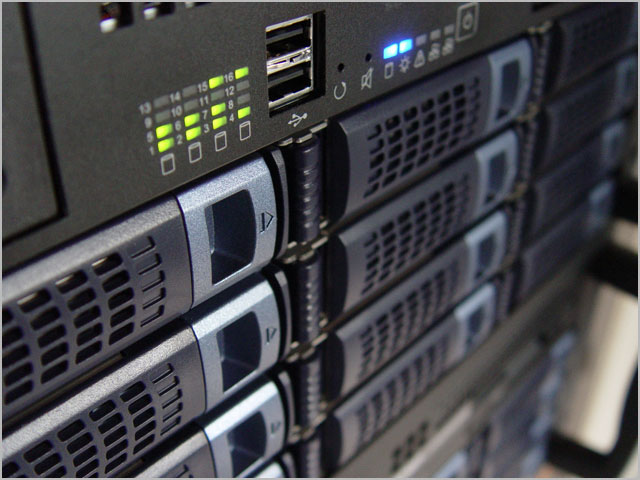
    Image credit: Whrelf Siemens, royalty free

    submit to reddit Print Friendly and PDF

    6 Comments

    You can follow any responses to this entry through the RSS 2.0 feed. You can skip to the end and leave a response. Pinging is currently not allowed.

    1. bob
      Posted 15/06/2012 at 5:51 pm | Permalink | Reply

      Does it have a 4G connection?

      • Noddy
        Posted 15/06/2012 at 7:04 pm | Permalink | Reply

        Nah, usb, you can see the ports on the front. Wow, there’s a plan, USB hubs are dirt cheap ;)

    2. Posted 15/06/2012 at 8:59 pm | Permalink | Reply

      What’s wrong with a Playstation 3 cluster? Would be cheaper :)

      • Jeff Petre
        Posted 18/06/2012 at 10:08 am | Permalink | Reply

        Sony killed that when they dropped the alternative OS option.

      • Noddy
        Posted 18/06/2012 at 11:17 am | Permalink | Reply

        It would be better and cheaper just to use a GPU cluster. Cell is dead and never lived up to it’s hype anyway. Most Cell time on the PS3 was used to makeup for the inadequacies of it’s GPU. That was hard to do as they stuffed up the Cell to GPU interface so data had to pass back through CPU memory which basically trippled it’s memory bandwidth usage.

    3. looktall
      Posted 19/06/2012 at 9:24 am | Permalink | Reply

      and just like that, it’s already superceded.

      http://www.itnews.com.au/News/305209,anu-to-install-12-petaflop-supercomputer.aspx

      Perth will be home to one of the world’s most powerful supercomputers, thanks to Australia securing co-hosting rights for the multi-billion-dollar Square Kilometre Array telescope.

      The computer, to be housed in the $80 million Pawsey Centre being built at Technology Park in Kensington, will have the capability of 20,000 quad-core desktop computers, processing the equivalent of a million CD-ROMs every minute.

      In computing jargon, it will be able to compute 1.5 quadrillion floating point operations every second, or 1.5 petaflops, when fully complete in April 2014.

      That would make it more powerful than the 1.2-petaflop supercomputer to be built by Fujitsu at the Australian National University in Canberra.

    Leave a Comment

    Comment


    Home Forums Topics

    Viewing 15 topics - 1 through 15 (of 66 total)
    Viewing 15 topics - 1 through 15 (of 66 total)

    Get our 'Best of the Week' newsletter on Fridays

    Just the most important stories, one email a week.

    Email address:


    Get our daily newsletter

    Get all our new articles every weekday morning.

    Email address:


  • Anonymous tips

    Got some inside information on something that should be made public? Use our anonymous tips form. Even Delimiter won't have a clue as to your real identity.

  • Most Popular Content

  • Enterprise IT news & views

    • Perpetual dumps CIO after Fujitsu outsourcing sacked

      It appears that the outsourcing arrangement between Perpetual and Fujitsu has gone well — so well, it appears, that Perpetual no longer believes it needs its chief information officer, Jenny Levy.

    • Victoria abandons IT shared services?
      Core CenITex services to be outsourced
      exit

      Dramatic internal documents leaked from CenITex this week have revealed that the Victorian State Government plans to turn the IT shared services agency into a ‘broker’, rather than a provider of services, and that the Government is considering outsourcing massive chunks of CenITex’s work.

    • Australia gets two Windows Azure datacentres ballmer-cloud

      Microsoft this morning revealed plans to offer its Windows Azure platform as a service from Australian datacentres located in Sydney and Melbourne, in the latest move by a global technology giant to offer cloud computing services from Australian facilities to meet local demand and address concerns around data sovereignty.

    • Oracle reveals swathe of Aussie rollouts larryellison

      Enterprise technology giant Oracle has published details of half a dozen sizable deployments of its technology by Australian customers, as it continues its push to convince local technology buyers of the popularity of its Fusion platforms.

    • Australia’s universities hacked on a regular basis security

      Not all of the hype around IT security can be believed at the moment — several times when your writer has investigated so-called ‘hacking’ attacks in recent months, we’ve found only low-level script-kiddie-type of behaviour at the bottom of the situation. However, there definitely are some serious break-ins around, as chronicled in this somewhat disturbing article published in late April by citizen journalism site The Citizen.

    • 32 years later, CGU replaces insurance IT platform puffing-billy

      Think core banking platforms last a long time? Check out the gray hairs and wrinkles on the positively ancient insurance IT system which CGU is still running. This thing is so old it should be code-named ‘Methuselah’.

  • Blog, Enterprise IT - May 23, 2013 13:03 - 0 Comments

    Perpetual dumps CIO after Fujitsu outsourcing

    More In Enterprise IT


    News, Telecommunications - May 23, 2013 11:57 - 78 Comments

    Mass piracy lawsuits are back in Australia:
    Law firm targets end users’ details

    More In Telecommunications


    Blog, Gadgets, Gaming - May 23, 2013 14:28 - 16 Comments

    Surprise! Xbox One neutered for Australia

    More In Gadgets


    Reviews - May 21, 2013 16:36 - 12 Comments

    HTC One: Review

    More In Reviews