

As expected, global technology giant HP this morning unveiled its private cloud model for the Australian market, revealing it had been working on the platform locally for some six months and that it was planning to release the names of its first customers early in the new year.
As with other private cloud models already being advanced locally by rivals such as Telstra, Optus, Fujitsu and CSC, HP’s offering will offer customers the ability to dynamically provision underlying infrastructure (infrastructure as a service) through a self-service portal. HP is also providing a number of standardised technology stacks including operating systems and business applications from the likes of Microsoft, Oracle and SAP.
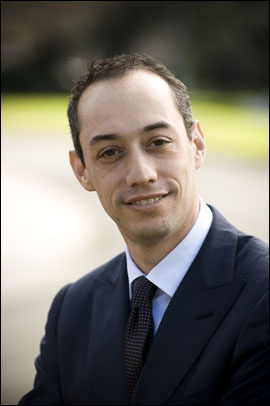
Speaking to journalists in Sydney, the local head of the company’s Enterprise Services division (formerly EDS), David Caspari (pictured below right), was quick to talk up the advantages of the platform, which HP dubs ‘Utility Services’ and is the local facet of its global cloud computing play.
Caspari said HP was “the largest IT company in the world”, with some 300,000 staff globally, and that this scale meant HP’s global product development capabilities were unmatched — and that this factor would flow through to the company’s local private cloud deployments.
“It’s something that should not be underestimated,” he said.
The executive said the ability to evolve and develop the company’s cloud platform with “hundreds, maybe thousands” of clients in multiple geographies gave HP “an incredible advantage” compared with those — like Telstra and Optus, although Caspari didn’t mention the pair — which were only innovating in “the relatively small marketplace in Australia”.
Up until the past several weeks, HP hasn’t publicly mentioned bringing its Utility Services model to Australia, even in interviews on the specific subject of private cloud.
However, the company’s local head of Utility Services, David Fox, said today developing the model in Australia had taken the company about six months, with it wanting to ensure it had the right capability and the right information to take to market.
Fox backed Caspari’s comments about the quality and breadth of the offering, claiming HP’s model was “more comprehensive” than its rivals, offering infrastructure, platform and software as a service.
The pair also gave a number of examples of how granular the company’s offering could be; noting, for example, that commitments to use the Utility Services model usually ranged from a year up to five years, but broken up into three monthly cycles where organisations could flex their requirements up and down and gaining complete transparency around pricing from within the self-service portal. In addition, there are different tiers of service to match each customer’s differing needs.
As with other private cloud providers, all customer data will remain within Australia to avoid regulatory headaches; but capitalising on global lessons.
Globally, HP already has about 300 customers using the Utility Services platform, with German agribusiness Syngenta mentioned as one particular example.
Despite the ongoing shift to private and public cloud services in Australia, the pair noted there would always be a place locally for the more traditional outsourcing services that HP — and before it, EDS — have offered for some time.
But in general Caspari, Fox and another executive at the event — David Simpfendorfer, head of IT Oursourcing Product Marketing for HP Enterprise Services in the Asia-Pacific & Japan area — were quite positive about the degree to which they expected Australian organisations to adopt cloud computing.
“There’s undoubtedly a significant shift in the marketplace,” said Fox.
Image credit: drivebysh00ter, Creative Commons