

news The NBN company has deployed a Fibre to the Node cabinet on the banks of the Tamar River in Tasmania, Delimiter can reveal, ignoring advice from local residents that the infrastructure would be sure to be breached by water during periods of excess rain.
The original version of the NBN as envisioned by the previous Labor Government called for most Australian premises to be covered by a full Fibre to the Premises rollout, with the remainder to be covered by satellite and fixed wireless technology.
However, the Coalition’s controversial Multi-Technology Mix instituted by Malcolm Turnbull as Communications Minister has seen the company switch to a technically inferior model re-using and upgrading the legacy copper (Fibre to the Node) and HFC cable networks owned by Telstra and Optus.
Most of the FTTP infrastructure being deployed by Labor is what is known as “passive” infrastructure. This infrastructure does not require electricity and can even survive being wet.
However, most of the FTTN infrastructure being deployed under the Coalition, in particular, is “active” infrastructure. It requires an active electrical power connection. The 30,000 FTTN cabinets, or ‘nodes’ currently being deployed around Australia also come with battery backup capability within the cabinet.
Such infrastructure is easily disabled by water ingress.
Despite this, Delimiter can reveal that the NBN company has recently chosen to deploy a FTTN node literally along the banks of the Tamar River in Tasmania.
A reader from the area this afternoon forwarded Delimiter extraordinary photos of an NBN company node embedded in wet mud on the banks of the river, just centimetres from the water.
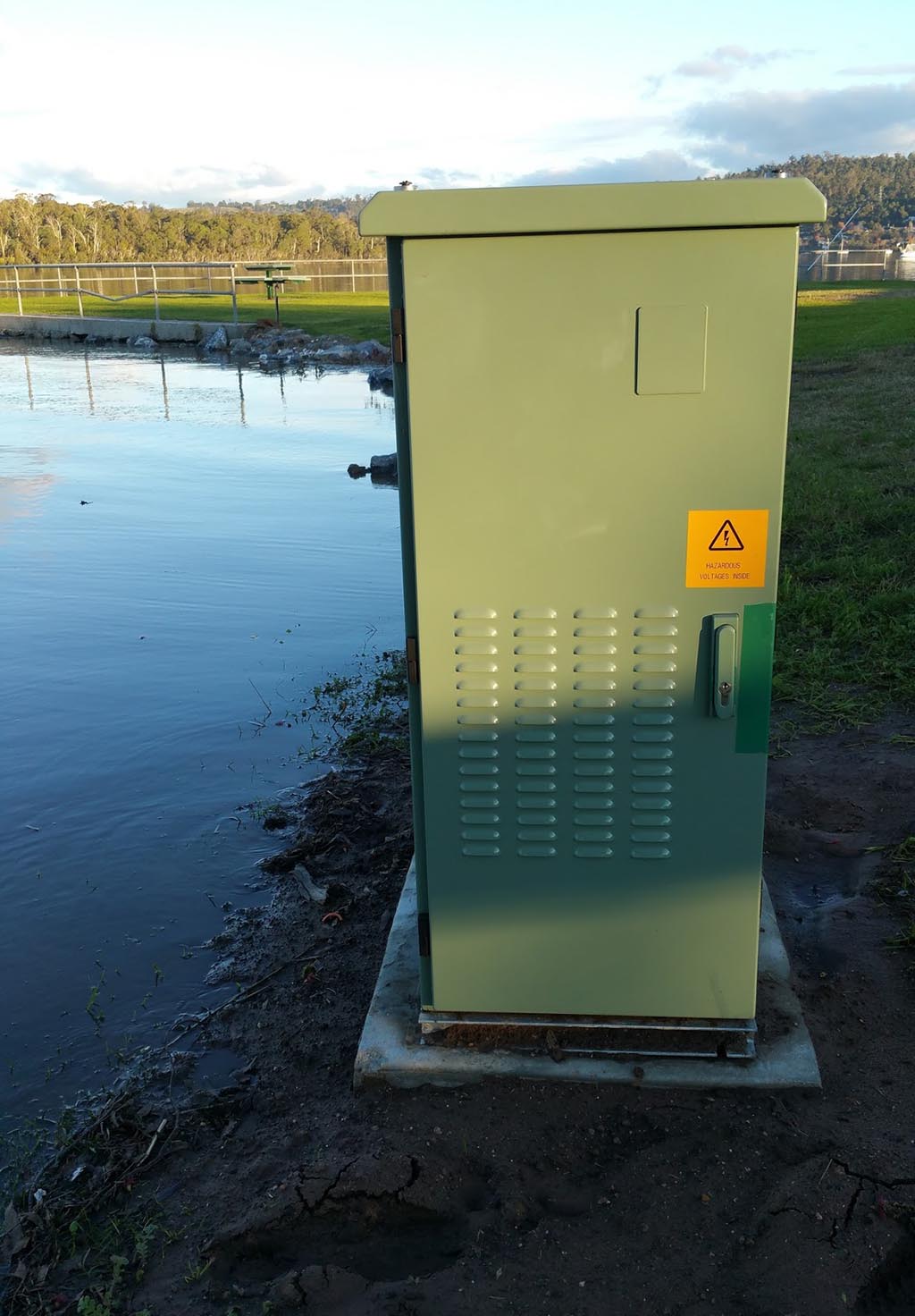

The node is not believed to be ‘live’ yet, meaning it is believed there is currently no electrical power being supplied to the cabinet.
However, the installation of the cabinet at all appears to violate basic common sense associated with the rollout of powered telecommunications infrastructure. The nearby Telstra telecommunications pit is already under water:
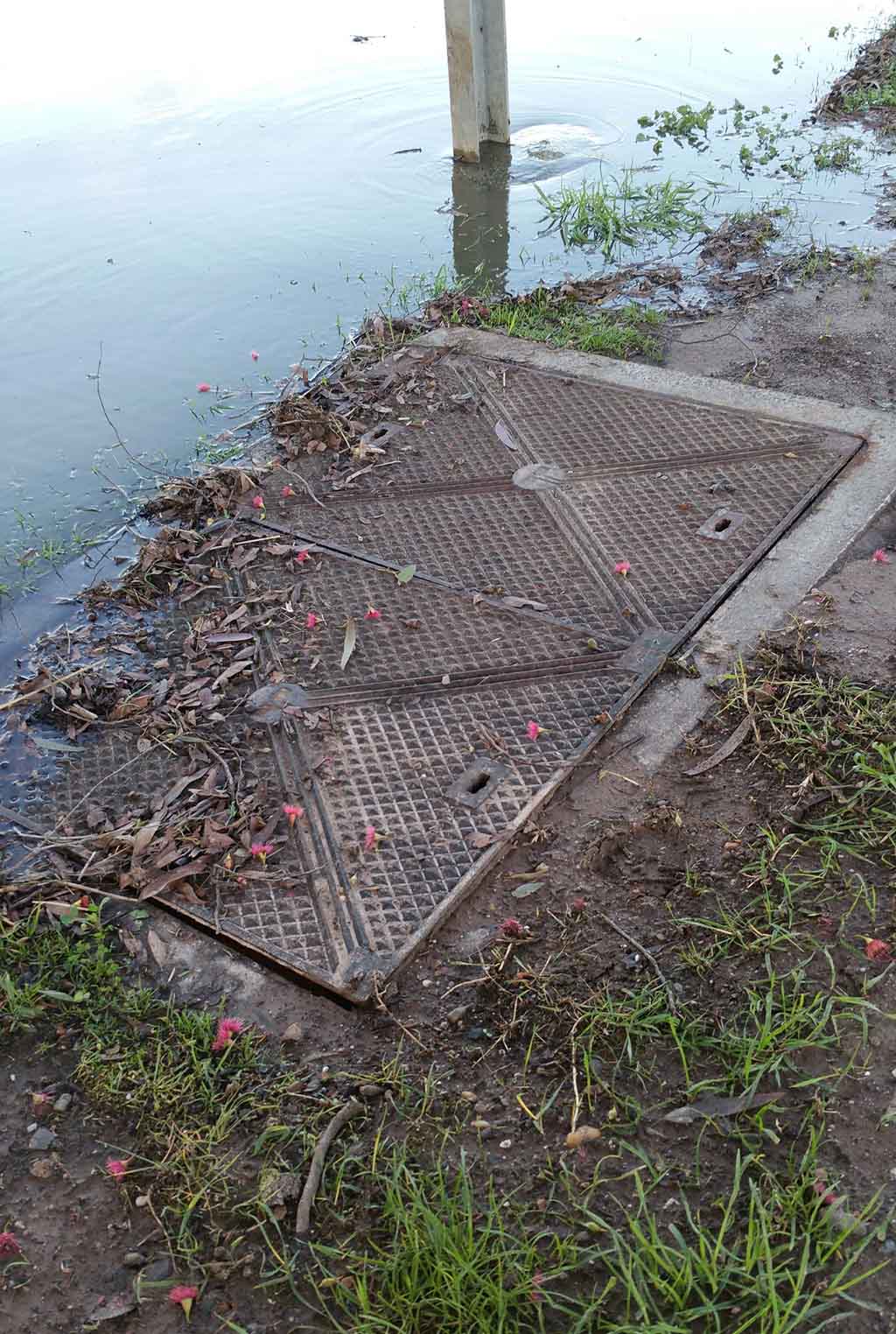
The reader informed Delimiter that they had informed the NBN company’s construction team, while the node was being constructed, that it was likely that the node would be affected by water.
The area concerned is currently experiencing high tide in the photos shown in this article, and is also being affected by flood waters coming down the North Esk and South Esk rivers.
However, the reader stated that in the past five years, the area has had a slightly higher tide without all the rain. An area of road further north than this node has previously been under water, meaning it would be likely that the node itself would be flooded at some point.
“They just told me to piss off,” the reader said, referring to their conversation with the construction crew.
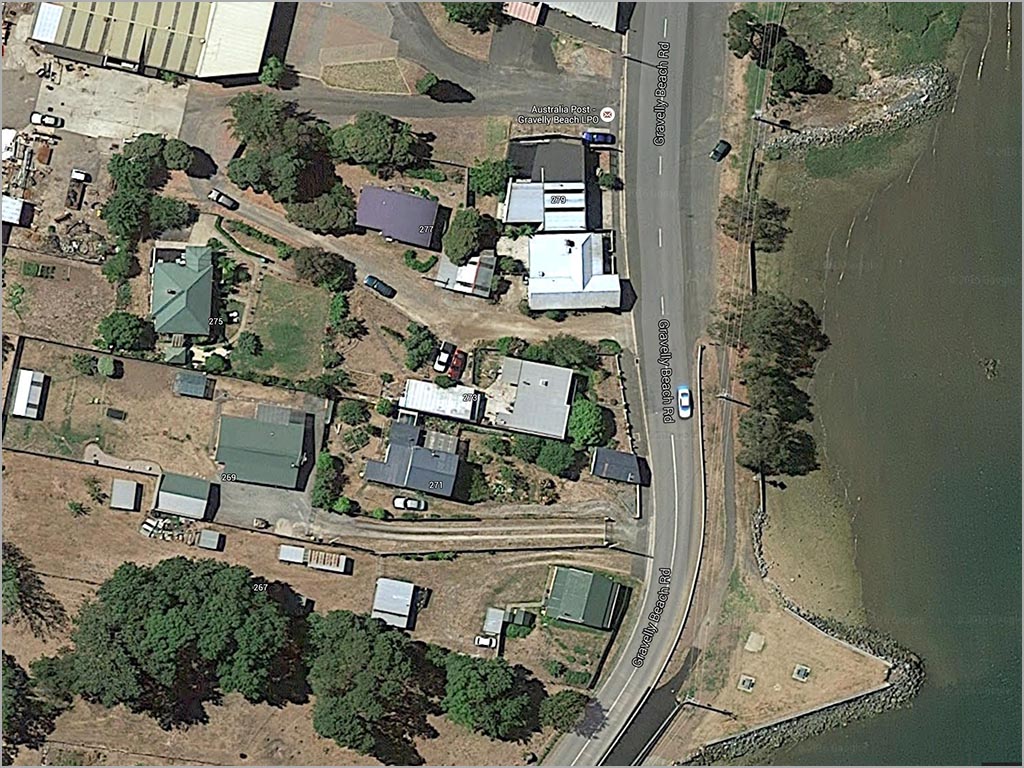
The area where the node has been deployed can be seen in the photo below from Google Maps. The node concerned is number 7EXE-01-06. It is located in the small township of Gravelly Beach north of Launceston.
The news comes as Delimiter has recently published a gallery of questionable locations for NBN nodes. The NBN company is currently deploying about 30,000 of the cabinets all around Australia.
opinion/analysis
What a fucking joke.
Whatever smart cookie thought this one up needs to be sent to a training course on common sense, and then funnelled into an office job that won’t involve installing electrical cables near water.
Meanwhile, here is my advice to the NBN company: Don’t power on the node. Just. Don’t. Do. It.
That much should be obvious. Right? Right?!
Image credit: Supplied by a reader