

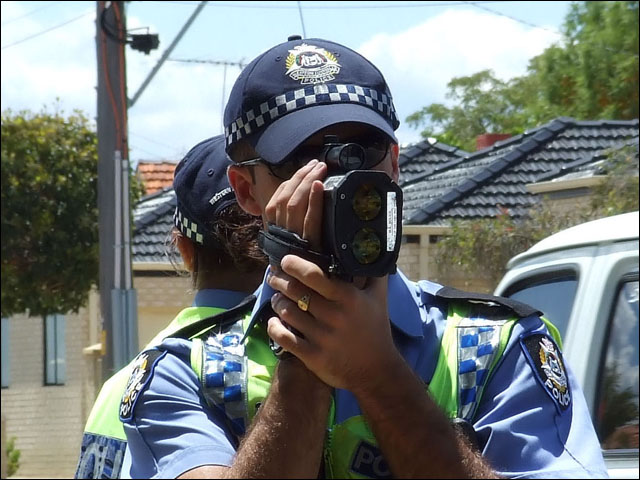
The Business Software Alliance Australia — a group which represents software companies on intellectual property issues — has called for Australian governments to create specialised cyber cops who would track down software pirates and bring them to justice.
In a blog post on Microsoft Australia’s government blog this week, BSAA co-chair Clayton Noble wrote that one way to drive down software piracy would be to: “Create specialised intellectual property enforcement units at the national and local level and provide dedicated resources to investigate and prosecute intellectual property theft.”
Microsoft — which is a member of the group — backed the BSAA’s statement.
“Microsoft believes that increased enforcement and education at both a State and Federal level would help to protect consumers and local businesses from all forms of piracy,” said Vanessa Hutley, director of Intellectual Property at Microsoft Australia.
Noble outlined four measures that the government should take to help software piracy;
- Create law enforcement units that specialise in intellectual property — local and national
- Step up cooperation with international border security and law enforcement agencies
- Provide technical education of enforcement personal to ensure they were equipped with the right tools
- Work closer with technology organisations, such as the BSAA , to make Australian individuals and businesses aware of the risks of software piracy
“Everyone has a role to play in reducing piracy, including industry stakeholders and the government, to ensure consumers are protected. Piracy does not just represent losses to industry and lost revenue for Government, but increasingly it poses an issue of security for businesses and consumers,” said Hutley.
“Microsoft continues to run a comprehensive enforcement and education program which is designed to stop those who seek to undermine the legitimate reseller community and to dupe consumers. We conduct an online monitoring program, which attempts to stop the trade in counterfeits over the internet, we continue to conduct surveys of the reseller landscape and take action against those trading in counterfeits. We also work with Customs and offer training to Law Enforcement at a State and Federal level.”
“However, more needs to be done to stop the trade in all types of counterfeit. More needs to be done to let the public know about the dangers of counterfeit goods and how they can avoid being exploited by those who wish only to take their money. Microsoft believes that increased enforcement and education at both a State and Federal level would help to protect consumers and local businesses from all forms of piracy.”
When asked if Microsoft had suggestions for how the Government could combat software piracy, Hutley said there was no single answer.
“But Microsoft, like the [BSAA], believes a concerted and coordinated enforcement program designed to stop the illegal importation and trade in counterfeits, coupled with an education program would be an important next step in protecting consumers who are increasingly being targeted by counterfeiters,” she said.
Hutley avoided the election subject when asked if Microsoft had different strategies to suggest based on what side won the upcoming Federal Election. “We conduct training with Customs, State and Federal police. We will continue to protect our own IP, will continue to improve our technology to ensure users of genuine software experience the benefits of our innovation and we will continue to educate the public and our customers and resellers about the dangers of counterfeit software,” she said.
“The benefits of a strong IP environment and strong local innovation are recognised by all, irrespective of their political philosophy. This is a community issue and Microsoft has continued to consult with Government and other industry stakeholders to improve the IP landscape for all.”
“However, a national systematic enforcement strategy and education program will mean that all creators, including local developers and local businesses will benefit from a level playing field to develop ideas and new business models in the changing economy.”
Industry Minister Kim Carr was also approached for comment on Noble’s suggestions for government action, but declined to comment, with a spokesperson referring Delimiter to intellectual property agency IP Australia which issued the following statement:
“The Government’s Advisory Council on Intellectual Property has prepared a report on Post-Grant Patent Enforcement Strategies. The report covers a number of areas identified in the blog by Clayton Noble. For example, Recommendation 8 states “That legislation be introduced to empower Australian Customs officials to seize goods at the border where the rights holder has forewarned them of a shipment of infringing product.”
In the blog entry Noble cited the seventh annual global software piracy study conducted by BSA globally along with IDC. The study, entitled “The Economic Benefits of Reducing PC Software Piracy”, found a two percent increase global software piracy from 41 percent in 2008 to 43 percent in 2009.
Australian software piracy decreased from 26 percent to 25 percent in that same time bracket. Noble blogged that while the fall was “an improvement”, it was “unacceptable” and lowering the software piracy percentage in Australia would be beneficial to the Australian economy and the population — creating “an additional 3,900 new Australian jobs and US$1.9 billion in economic growth in Australia”.
“There have been many factors to the drop in piracy in Australia. This has been a trend over the last ten years, as the BSA reports have shown. One important factor in this ongoing trend over ten years has been increased awareness of the role IP and innovation play in our present and future economic growth,” Hutley said.
Two of the reasons outlined in the report as to why consumers pirated software were the need to save money and the inability to purchase software products because of cash flow issues.
Noble wrote that the study found that a 25 percent piracy rate in Australia during the year 2009 amounted to US$550 million in lost revenue. The government was losing out on US$400 million in tax revenue, according to the IDC study.
“In Australia, the impact of software piracy to the industry is estimated to be $550 million and it is also estimated that 1 in 4 PCs is loaded with unlicensed software,” said Hutley.
“From a financial perspective, software piracy not only impacts on Microsoft and other vendors but also on the local software industry, including genuine resellers, independent developers and their employees, whose livelihoods are put at risk. In the Microsoft eco system, for every dollar Microsoft realises from reduced software piracy, other companies in the software ecosystem will realise $5.50(USD).
Late last year Microsoft had offered a free license to a consumer who had unknowingly purchased a pirated Microsoft Office software product.
Image credit: Adrian van Leen, royalty free
“Microsoft believes that increased enforcement and education at both a State and Federal level would help to protect consumers and local businesses from all forms of piracy” said Vanessa Hutley, director of Intellectual Property at Microsoft Australia.
Correction:
“Microsoft believes that increased enforcement and education at both a State and Federal level would help to protect Microsoft from all forms of piracy”
The fact is there really hasnt been any “significant reduction” in piracy rates over the last 10 years.
The economic benefits are the same rubbery sets of numbers and same old story every year and they aren’t making the inroads they had hoped for, so is the BSA / BSAA an effective organisation?
see http://www.pcprofile.com/How_is_the_BSA_Going_To_Achieve_a_10_point_reduction_in_Piracy_Rates.pdf
Comments are closed.