

news Labor MP Ed Husic has publicly raised the prospect of forcing recalcitrant technology vendors to appear before a parliamentary committee on IT price hikes in Australia, alleging that some suppliers are “treating the Parliament with contempt”.
In May, following a public campaign on the issue by Husic, the House of Representatives Standing Committee on Infrastructure and Communications called for submissions to help inform an inquiry into pricing of technology goods and services in Australia, publishing the terms of reference for the initiative on its web site. The results have so far demonstrated a strong groundswell of public anger about ongoing markups on technology goods sold in Australia.
Many of the submissions from users focused on the fact that online stores such as Apple’s iTunes, Valve’s Steam, Microsoft’s Xbox Live, Sony’s PlayStation Network, Amazon’s Kindle store and Adobe’s software store charged Australians higher prices for the exact same software and content than residents of other countries, particularly countries such as the US. Companies such as Microsoft have previously justified the charges based on the increased cost of doing business in Australia.
However, not all companies whose products have been mentioned by the inquiry have volunteered to attend to give evidence. US software giant Adobe, for example, declined to appear to give evidence to the inquiry, although it participated in a submission by the Australian Information Industry Association. Adobe has a practice of commonly marking up software products for the Australian market such as its popular image editing application Photoshop — despite the fact that the software is often downloaded from the same site in Australia and the US.
In a speech to the Global Access Partners Annual Growth Summit last week (the transcript is available online here), Husic severely criticised both specific vendors who had declined to attend the inquiry, as well as the general approach taken by some industry associations.
A submission to the inquiry by the Australian Industry Group, he said, provided no quantitative data to explain local price hikes of between 60 to 80 percent on some products, especially software downloads. “The AiG gave the nod to the usual litany of underpinning factors driving up costs: rents, labour, taxes, warranties, environmental regulation,” Husic said. “It’s even harder to get this data when the major vendors refuse to engage with the Inquiry, treating the Parliament with contempt.”
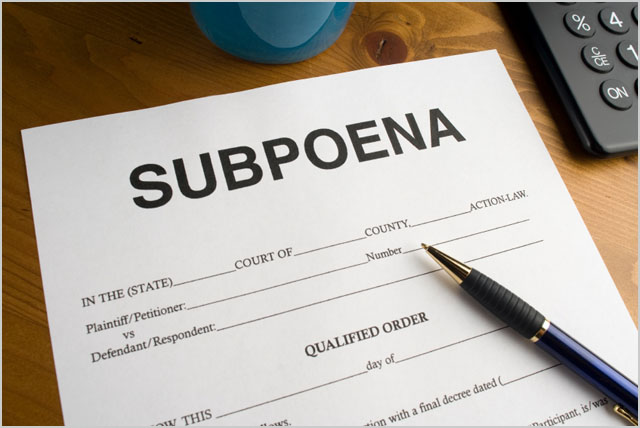
“I believe the Inquiry will be forced to confront the prospect of subpoenaing major vendors to provide greater detail to justify the price discrimination being levelled at Australian businesses – and something more substantive than a one to five page submission.”
Husic told the audience that, given the cost to the broader business community of local price markups on technology goods and services in Australia, he would have thought local industry in general would have been “a natural ally” to the Government on the issue of IT price hikes.
However, he said, the AiG had argued in its submission that government intervention on the issue wasn’t warranted, due to the cost of doing business in Australia already being high, the idea that price fixing should be left to the market, and that competition law would be the appropriate avenue to address the issue.
“Members of the AiG should be asking why their industry association has sought to place greater emphasis on the need to represent one section of its membership (IT) at the expense of pursuing lower business inputs for the broader AiG membership,” said Husic. “If AiG and others want to maintain the business cost mantra I merely ask them to consider one question: are you prepared to concede that pricing approach of some of the big players in the IT sector might just be adding to those costs?”
“If you do, then it might be time to work cooperatively to see those costs start gliding downwards.”
“Ultimately, I believe the biggest motivator for this is simple: the business community and the broader nation will more quickly reap the benefits of our revitalised broadband infrastructure by ensuring that the equipment necessary to connect to this new network is secured at less cost. Remember: up to two million Australian businesses paying $11,000 each – being charged between 60 to 80 per cent more for the privilege. That focuses the mind… and the bottom line.”
Husic paid particular credit to a submission to the inquiry made by consumer advocacy group Choice, which examined prices across 200 different IT products, in the Australian, US and UK markets.
“It found Australians are paying up to 60 percent – sometimes up to 80 percent – more for software, although the differences are not as stark when it comes to hardware,” Husic said. “It blames price discrimination: because consumers are prepared to pay, the vendors are happy to overcharge.”
“The issue with software is baffling because with downloads things such as shipping and handling costs are almost negligible. If the evidence before the Committee is does show we’re paying 60 to 80 per cent more for hardware and software in this country – and taking into account the Sensis figures for IT spend by SMEs – then could potentially be artificially inflating prices within our economy.”
opinion/analysis
It will be interesting to see how serious the parliamentary committee examining this issue is about tackling the vendors concerned. Are most of the politicians involved as passionate about IT price hikes as Husic, or at least willing to follow his lead? If so, we may see companies such as Adobe subpoena’d to appear before the inquiry. And that would be a fascinating thing. It’s been a while since we’ve had a chance to see what would likely be a very adversarial confrontation between politicians and major private sector technology vendors.
Secondly, I have to say, in general I think Husic has a very valid point here. Companies such as Adobe, Microsoft and Lenovo consider it very common practice to mark up some of their technology goods and services when sold in the Australian market. I’m not going to say that the practice is always illegitimate — sometimes there are solid reasons for it — and, of course, in a free market, such companies are allowed to price their products as they wish.
However, if there are good reasons for such pricing practices, what do these companies have to gain from not appearing in front of the price hike inquiry and disclosing those reasons? Communication and transparency with your customers is nearly always a good thing in business. It helps defuse tension between the various parties and helps cement those customers to your products and services.
Until these companies do start talking more publicly about their Australian pricing strategies, they are going to continue facing questions on these issues. Attending this inquiry and providing at least a cursory level of disclosure into their local pricing regime — even if those prices don’t change — will let customers know that their suppliers are listening to them, and increase goodwill. And that’s always a good thing.
If these companies had legitimate reasons for marking their prices up so far, their claims and documentation they rely on to validate the stance would stand up to scrutiny.
In other words, if they dont have anything to hide, why are they hiding?
If someone scrutinised their numbers, and found their prices, or relatively near, were justified, then its something they could point at for years to come.
I for one would love to see someone truly independant audit their practice and add up every point of cost, both here and the US, and show what that real cost at each step is so we could see every markup along the way.
Noooo they are not “baffling circumstances” as to why they are not appearing in parliament…
They are avoiding public accountablity – going on record, and trying to bullshit their way out of being a pack of thieving lying, scheming cunts – who act with unconscionable conduct – to scam the consumer.
That is it in a fucking nutshell.
Captive Audience + Monopolistic Practices = Price Gouging.
Fuck them – kick them all in their cunts and nuts.
It’s no wonder some people turn to piracy!
Which leads to the question, why should the Australian Gov support the copyright claims by these same companies.
They are charging Australians unfairly (as evidenced by them submitting no evidence to the contrary), and want to cry about piracy and lobby for change our laws to protect their interests.
Fuse the two agendas, “Shaft aussies and get shafted”, or “play fair and demand fair treatment”, no mix n match allowed.
Good onya Ed!!
There are _no_ reason downloaded software here should be any cheaper/dearer than anywhere else, especially when the support for it is usually based in some help centre in Asia…
It is interesting that Valve’s Steam platform is mentioned. My understanding of the issue there is that companies have distribution rights to certain publishers products and these arrangements pre-date the digital platforms being in place. Under these arrangements the distributors are entitled to some say in or a certain percentage of the sale price so they share some of the responsibility for the Australia tax.
Steam is a really good example to looks because you have multiple publishers using the platform. They all have the effectively the same distribution cost for the content, yet you have some publishers charging more for what seems to be no other reason than the fact the walled garden restricting easy access to foreign markets exists. Sorry Activations I don’t think advertising costs in Australia justify a 450% mark up on for example CoD MW2.
I agree that Steam, and Valve, provide a great example of how pricing is influenced by publisher greed rather than by market costs. A large proportion of games on Steam cost the same in Australia and the US. A significant minority, though, cost an awful lot more in Australia. Why? What is different in those games that makes them cost more in Australia? It appears to be simply the publisher decision on pricing – that is the single most obvious common element.
Haul them over the hot coals and make them accountable.
some suppliers are “treating the Parliament with contempt”. Duh! Of course they are, we all are. Parliament has shown itself to be a contemptible place. If parliament endorses the TPP granting even more rights to corporations to move about the world unchallenged then it will be even more two faced and contemptible. Where are we on releasing drafts of the TPP for public discussion Mr Husic?
Ultimately the purchasing decisions (Oz tax and all) are the product of a marketplace involving grown ups entering into a contract or not. Parliament has no place and little power in such an environment and should go back to important issues like mandatory plastic hats for bicycle riders or rewarding its minions with even greater powers as a measure of its otherwise impotent glory.
Coal Seem Gas extraction highlights what is wrong with this country, no one actually owns anything – everything is subject to government fiat. The reward for hard work and success is taxation and possibly total forfeiture to government. Who would invest in anything but the most basic structures in such an environment.
If Mr Husic really wants to change the game then he should campaign for SUBSTANTIAL reductions in government so we can be free of the real Oz Tax, the work for the dole scheme which is our public sector and the drag on investment and innovation that it represents. Perhaps even a bill of rights and a note on private ownership. Maybe one day if we are not all working to support our sponsored public servant then we might have time to write our own autocad or (heaven forbid) windows. Then we could charge whatever we liked in other countries.
Do you have anything other than hate and vitriol?
You are also off-topic, or I would respond in more detail to your laughable “ideas” of government vs. private sector.
And you misspelt “seam”.
Thanks Stephen for your observations. Nope, hate and vitriol is about it. It comes with age.
What solutions or successful examples do you have of a government entering a free market to force what is in effect a price cap? For that is what Mr Husic is trying to achieve. He is offering no reductions in the cost of labour, distribution, taxation or regulatory obligations. Just a demand that the price be lowered.
No, it is not off topic, it gets back to the question of ownership. Adobe, Microsoft or whomever own their products. They get to choose the terms of the sale and the price that they offer to the market. As consumers we get to choose to purchase or not. My Husic is confusing that model of ownership with the Australian model where no one owns anything, everything is subject to the whims of a government. Coal Seam Gas is an excellent example of this conflict whereby farmers own their land, have paid for it and have worked it yet have no say if a more affluent lobbying body desires it. Taxation is another example where governments confuse the concept of ownership – read some of Thomas Jefferson’s thoughts on the matter. The TPP also highlights the conflict within government of this concept of ownership and the role of government in protecting it – for some but not for others. Ultimately Mr Husic is full of bluff and bluster and will have little effect but as a play to the cheap seats.
I would be delighted to hear in more detail your response to my views of government vs the private sector. I am pretty sure that I have basic economics behind me as well as examples from the history of Soviet era socialism. But if you can see perhaps a third way then I would be most interested to listen.
Well, we can start with the US DoJ vs. Microsoft, as well as the EU actions.
Private enterprise tends towards monopoly without government intervention. Private enterprise is not there for the consumer, it is a parasite. It does not care about people.
But if you’d like to live in Dickensian England, that’s the best example to date of “free markets”.
Adobe, Microsoft etc. have to the extent that governments have permitted them to do so tried to tie customers to their products. Microsoft has spent decades trying to hold on to proprietary file formats so that if you want to view their files you must use their product. Unfortunately for them, legislators have seen how bad this is for consumers. So they rely on whatever they can get away with, and tie customers in however they can. If Adobe is an industry standard, then there is no point your company using something different even if Adobe costs you double what your competitors pay.
I agree with you that government needs to understand why it is demanding something (and this conflates with the current discussion about data retention), but government continues to have a role on behalf of the consumer.
The coal seam gas debate is a different discussion, and yes farmers are getting screwed. On the TPP, my thoughts align with those of the authors of “Against Intellectual Monopoly” (http://levine.sscnet.ucla.edu/general/intellectual/againstnew.htm).
But government must have a role, because consumers continue to get screwed otherwise – the problem is when government thinks its role is to promote business rather than people.
Doesn’t the AUS/US FTA state that there are to be no barriers preventing access to US businesses? Shouldn’t this mean that geo-locking content is in breach of this agreement?
In response to those shouting “Price CAP!!” from the rooftops, perhaps our gov’t could simply make it illegal to geo-lock or geo-locate (By IP Address) Australian citizens. We would then be free to purchase from the same website’s for the same prices paid by US citizens.
I think you’re assuming that the FTA has anything in it that might be advantageous to Australia.
Comments are closed.